
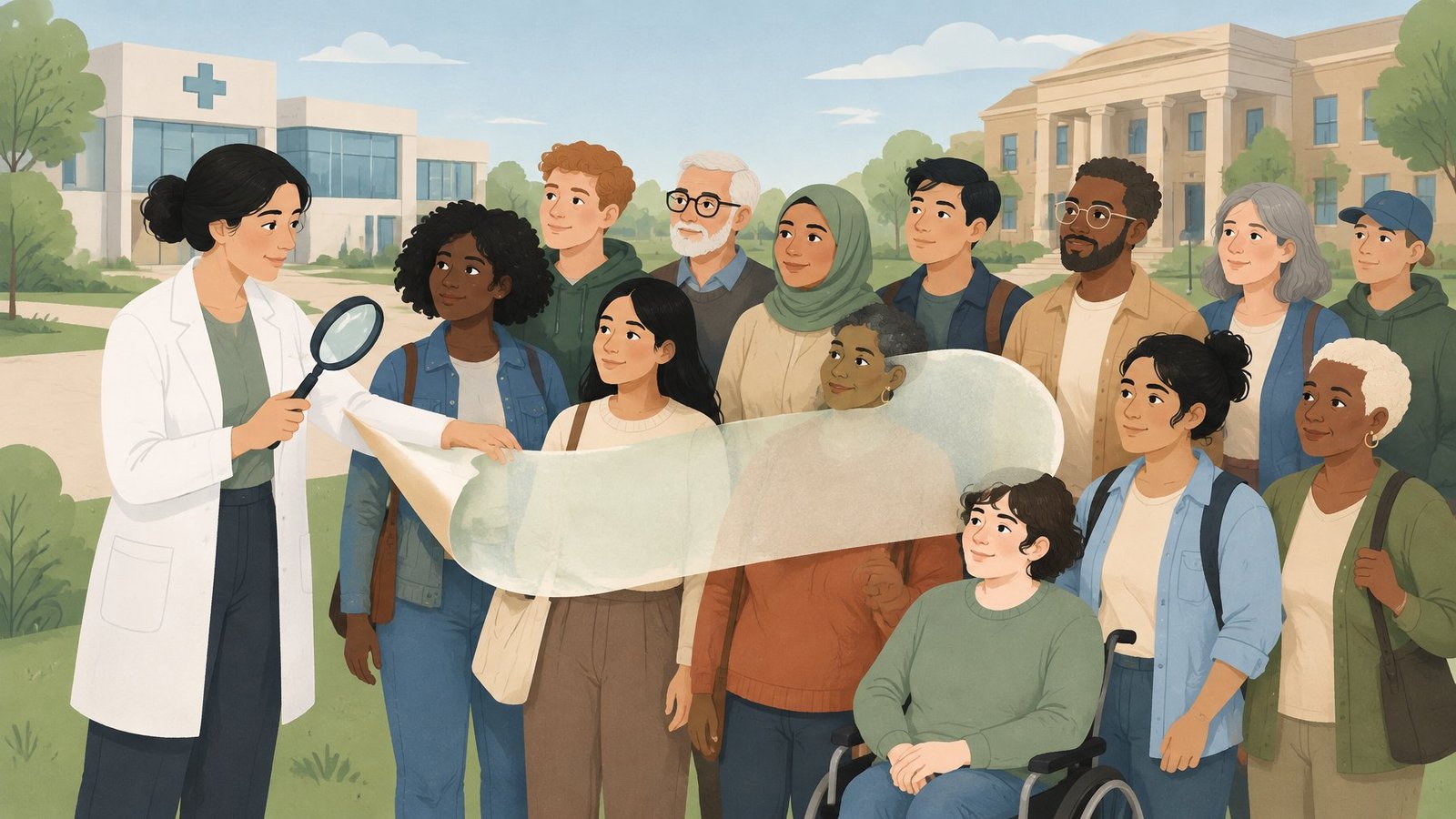
Social scientists are good at naming harms such as discrimination and exclusion, but they rarely ask when a label has stopped fitting the facts. Two psychologists argue that the field should borrow a habit from medicine and routinely revisit, and sometimes reverse, its diagnoses of social ills.
The essay, by Maja Graso of the University of Groningen and Tania Reynolds of the University of New Mexico and the Kinsey Institute, was published in Theory and Society on March 27, 2026.
Lessons from overdiagnosis in medicine
The authors start from medical research on labels that stick after they stop helping. They cite evidence that up to 30% of people diagnosed with asthma do not have it when objective tests are used, and that children born just before a school entry cutoff are more likely to be diagnosed with ADHD than those born just after.
Doctors have responded with calls to de-prescribe and de-diagnose. Graso and Reynolds ask whether the social sciences need the same review.
Gender discrimination as a test case
Their main example is gender discrimination. They point to Pew Research Center surveys of US high school students: in 2022, 67% of girls said women face discrimination in getting equal pay, up from 51% in 1992, and 70% saw discrimination in leadership roles, up from 59%.
Over the same three decades, they write, women’s education, representation and access to leadership rose substantially. They also cite a meta-analysis finding that hiring bias against women has declined since 1976 and has slightly favoured women since 2009, while bias against men in female-dominated fields tends to go unnoticed.
A label that no longer fits can do harm, they argue. Perceiving oneself as a target of discrimination is linked to lower well-being, even in experiments that only manipulate the perception. Interventions aimed at the wrong cause can misfire, and expecting hostility from others is linked to more aggression.
The authors stress that these links are not settled causal accounts and should be tested directly.
What diagnostic stewardship would involve
Graso and Reynolds do not call for dropping harm labels wholesale. They warn that withdrawing a useful diagnosis can be as damaging as never revisiting one, and that de-diagnosis carries a real risk of dismissing genuine suffering.
Instead, they propose a continuing process: stay open to evidence that a harm has shrunk, measure harm consistently across groups, explain any change clearly to the people affected, and apply the same scrutiny evenhandedly to every perception of harm.
They also name the obstacles, including moral conviction, the identities people build around a label, and institutions whose existence depends on finding harm. In their view, a diagnosis should never be permanently revoked, only revisited whenever the key indicators change.
Study Details:
- Title: A case for de-diagnosis of harms in the social and behavioral sciences
- Authors: Maja Graso, Tania Reynolds
- Journal: Theory and Society
- Publication Date: March 27, 2026
- DOI: 10.1007/s11186-026-09691-1