
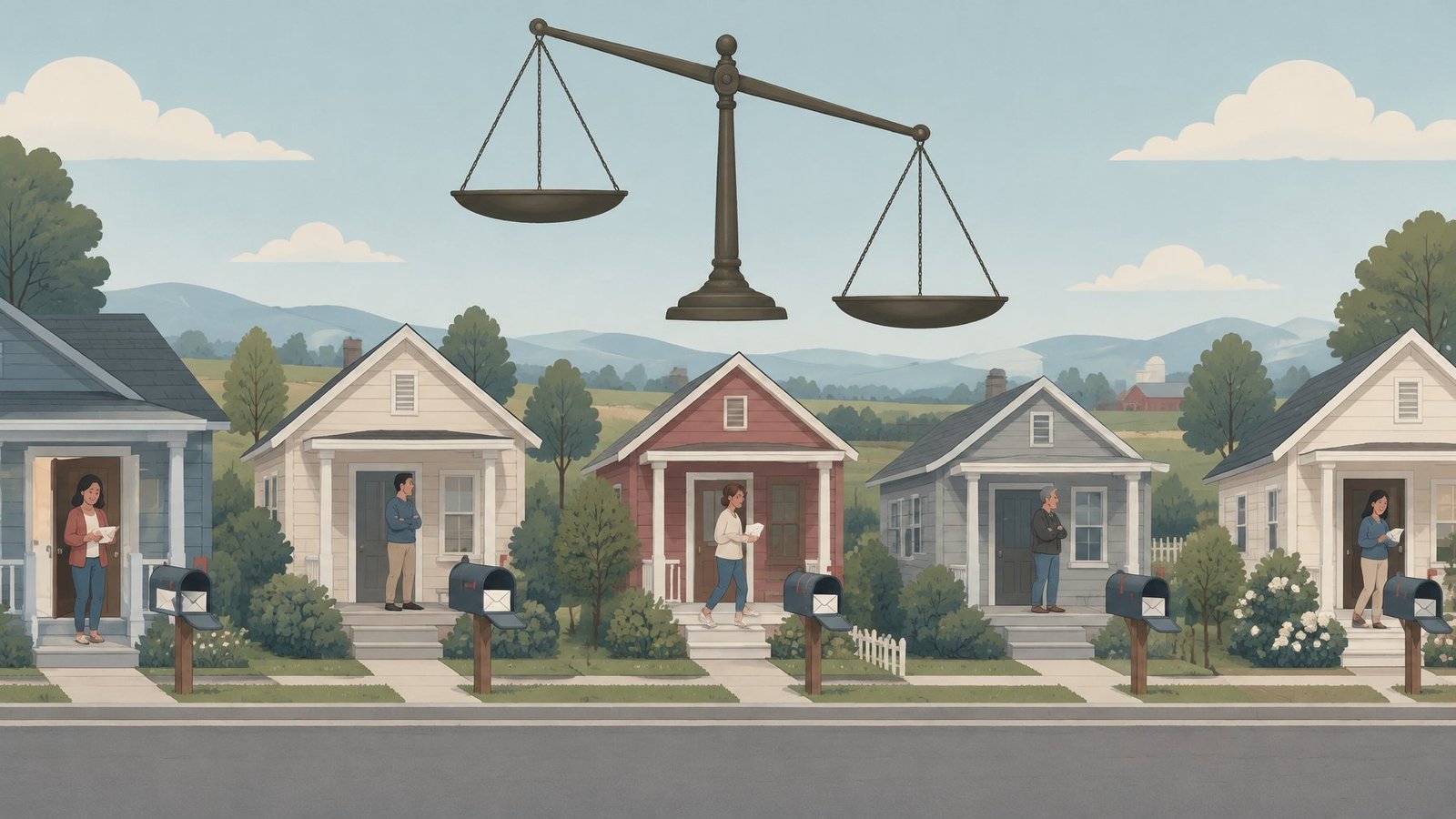
Polls underestimated Donald Trump in 2020 because many of his supporters declined to take them, not because respondents hid how they voted. A detailed study of one of the most rigorous US election surveys finds that this nonresponse alone is big enough to explain its miss.
The paper is by Matthew Tyler, D. Sunshine Hillygus, Matthew DeBell, Ted Brader, Shanto Iyengar, Daron Shaw and Nicholas A. Valentino. It was published in the American Journal of Political Science on April 28, 2026.
Even the gold standard missed
The American National Election Studies (ANES), running since 1948, is a national probability survey of US citizens interviewed before and after each presidential election. In 2020, Biden won the popular vote by 4.5 percentage points, but the ANES put his margin at 11.2, an error of 6.7 points. Between 2000 and 2016, its error never exceeded three points.
The 2020 ANES offered unusual tools for working out why. It sampled from a list of postal addresses, so researchers could compare households that responded with those that did not. It included 2,839 people re-interviewed from 2016, two independent checks against voter files, and a short follow-up mail survey of nonrespondents.
What the researchers ruled out
The sample itself was not the problem. About 19.9% of sampled addresses were rural, against 19.2% of US households, and sampled addresses matched the nation’s average county-level vote margin.
The authors also found no support for the “shy Trump voter” idea that respondents concealed a Trump vote. Pre- and post-election answers barely differed, and the 1.8% to 2.4% of voters who declined to name a candidate did not lean strongly toward Trump in how they rated the two candidates.
False reports of turnout played at most a small role, trimming the error by about 1.6 points under one validation method and not consistently across both.
Trump voters stayed away
The strongest evidence came from the 2016 panel. After adjusting for the demographic and geographic factors used to weight the survey, people who had backed Clinton in 2016 were 4.2 percentage points more likely to respond in 2020 than those who had backed Trump.
People who began the 2020 survey but quit midway also leaned toward Trump. Among validated voters, Biden supporters were 1.9 points more likely to finish once they had started.
The follow-up survey of nonrespondents pointed the same way, though its estimates were too imprecise to be conclusive on their own.
Using a new formula linking this response gap to the overall response rate, about 41% in 2020, the authors estimate that nonresponse bias was roughly as large as the observed error of 5.2 to 7.4 points. Standard weighting by demographics did not correct it, because the gap existed among people who looked alike on those measures.
A warning for all political surveys
The authors note that the ANES differs from typical pre-election polls, but argue that the same reluctance should affect other surveys, and the average national poll in 2020 erred by about 4 points toward Biden. They write that their analyses “identify a fundamental threat to political surveys.”
Their aim, they stress, was to diagnose the bias rather than fix it. The diagnosis is clear on one point: weighting alone did not close a gap that ran between Trump and Clinton voters who otherwise looked alike.
Study Details:
- Title: Why are surveys struggling to estimate vote shares?
- Authors: Matthew Tyler, D. Sunshine Hillygus, Matthew DeBell, Ted Brader, Shanto Iyengar, Daron Shaw, Nicholas A. Valentino
- Journal: American Journal of Political Science
- Publication Date: April 28, 2026
- DOI: 10.1111/ajps.70051