
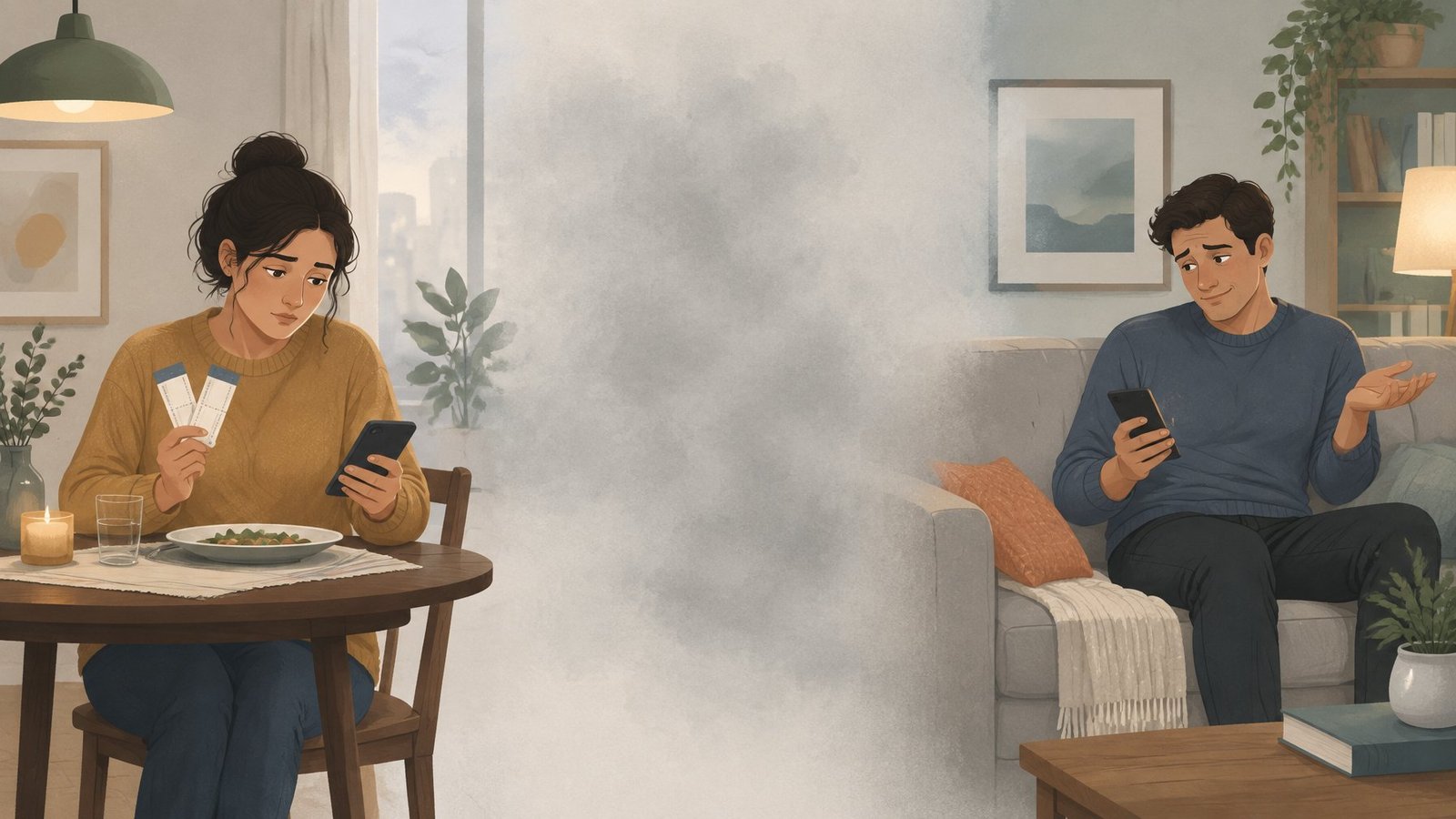
When a friend invites you out and you are not sure, “maybe” feels like the kind answer. A series of experiments suggests the person who invited you would usually rather hear “no”.
The research was carried out by Julian Givi of West Virginia University, Colleen P. Kirk of the New York Institute of Technology, Daniel M. Grossman of the University of Missouri-St. Louis and Constantine Sedikides of the University of Southampton. It appeared online in the Journal of Experimental Social Psychology on August 7, 2025.
Hosts feel disrespected by a “maybe”
All participants were U.S. adults recruited through Prolific. They read short scenarios, such as a friend with a spare ticket to a restaurant soft launch, and took the role of either the person inviting or the person invited.
In the first experiment, with 404 people, 65% of invitees predicted their friend would prefer a “maybe”, but only 34% of inviters actually did. Invitees also underestimated how much more disrespected a host feels on receiving a “maybe” rather than a “no”, and that gap explained the wrong prediction.
The pattern held when the second experiment spelled out the details: a 50% chance the invitee would be free, and a promise to answer by the end of the weekend. Here 63% of invitees guessed hosts wanted a “maybe”, against 42% of hosts.
A self-serving guess
A pilot study of 297 people showed why the two sides differ. Asked to explain their choice unprompted, half of the invitees said a “maybe” keeps their options open, while 47% of the inviters said a “no” lets them get on with their plans.
The authors argue that invitees are partly fooling themselves, because a “maybe” keeps their own options open. In one study, 75% of invitees preferred to say “maybe”, and those who did were more likely to assume the host felt the same.
When the restaurant served food the invitee liked, 76% thought the host would prefer a “maybe”. When the invitee disliked the cuisine, that fell to 36%, even though the host knew nothing about their taste.
Taking the host’s view first fixed the error. Participants who answered as the inviter before answering as the invitee predicted the host’s preference almost exactly: 37% against 36%.
What people actually do
In the final experiment, invitees were asked how they would reply rather than what they would prefer. Some 80% said they would respond “maybe”, while only 48% of inviters wanted to receive one.
The team notes that every sample came from the United States and that the findings need testing in other cultures. They suggest two fixes: picture yourself as the host before replying, or send the “maybe” while telling the host they can treat it as a “no”.
Study Details:
- Title: Maybe don’t say “maybe”: How and why invitees fail to realize that they should not respond to invitations with a “maybe”
- Authors: Julian Givi, Colleen P. Kirk, Daniel M. Grossman, Constantine Sedikides
- Journal: Journal of Experimental Social Psychology
- Publication Date: August 7, 2025
- DOI: 10.1016/j.jesp.2025.104814