
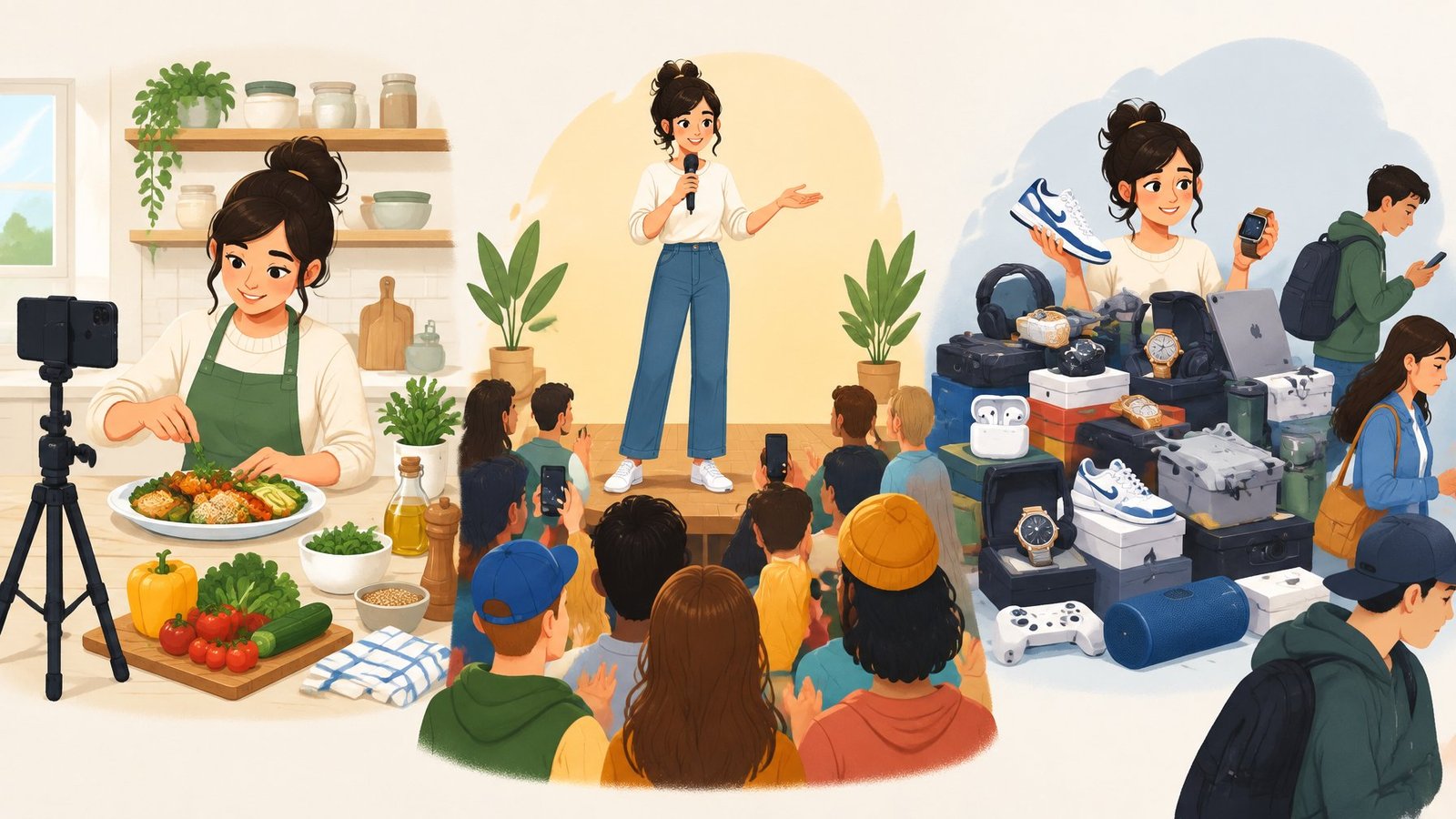
Social media influencers tend to be choosy about sponsorships while they are building an audience, and then start promoting almost anything once they are well known. An economic model explains why that switch is a rational business decision, and predicts when it happens.
The paper is by Cristina Nistor and Matthew Selove of Chapman University and J. Miguel Villas-Boas of the University of California, Berkeley. It was published online in Management Science on September 27, 2024, and appeared in the journal’s June 2025 issue.
Growing an audience versus cashing in
Companies spent about $21.1 billion on paid social media endorsements in 2023, the authors note, up from $16.4 billion in 2022. Influencers get frequent offers. Endorsing products that fit their persona keeps followers happy, while taking every deal earns more per follower but drives some followers away.
The authors open with a real example: a healthy-eating Instagram account that grew to 250,000 followers in three years while endorsing frozen juice and organic snack bars. Over the next five years it endorsed track suits and wristwatches, and added only 100,000 more followers.
In the model, new people discover an influencer at a rate that rises with her current follower count, much like how products spread by word of mouth. Being authentic keeps every aware person following, which speeds up growth. Being inauthentic raises revenue per follower but shrinks the audience and slows discovery.
The switch comes once awareness is high
When almost nobody knows an influencer, growth compounds quickly, so as long as she cares reasonably about future earnings, staying authentic pays off. As awareness climbs, brands offer bigger payments while the pool of people who have not yet heard of her shrinks. At some point, cashing in on current followers beats growing, and she becomes inauthentic.
That runs against classic reputation models, in which big firms guard their brands more carefully than small ones. Here, smaller influencers are the trustworthy ones.
Celebrities, viral apps and short-term audiences
Traditional celebrities, who gain fame through sport, music or film, have less reason to protect authenticity early. The model predicts they go inauthentic at a lower awareness level, which fits teenage tennis stars Carlos Alcaraz and Emma Raducanu signing luxury car deals.
On algorithm-driven platforms like TikTok, where any post might go viral, the pattern flips twice. A new influencer starts out inauthentic, hoping a sponsored post takes off, then turns authentic to grow fast, and finally goes inauthentic again.
If followers turn over quickly, as with baby care or college application advice, the influencer may stay authentic for good. The authors’ advice to brands: sign rapidly growing newcomers only when the product genuinely fits their content, and turn to established influencers for products that are a looser fit.
Study Details:
- Title: Influencer Authenticity: To Grow or to Monetize
- Authors: Cristina Nistor, Matthew Selove, J. Miguel Villas-Boas
- Journal: Management Science, Vol. 71, No. 6, pages 5251-5267
- Publication Date: September 27, 2024 (online); June 2025 issue
- DOI: 10.1287/mnsc.2023.03479