
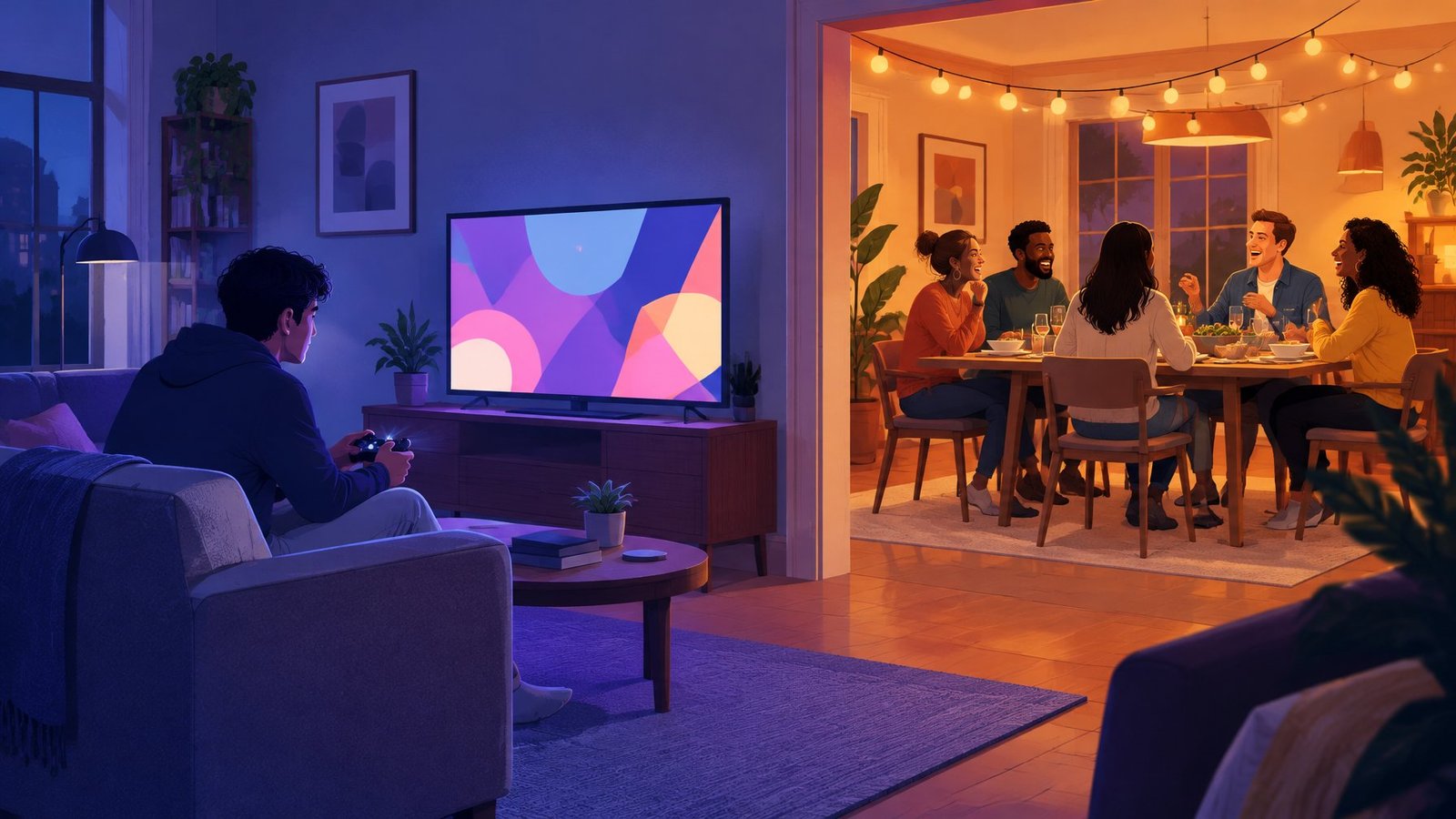
Better-looking people play fewer video games, and the reason may be simple: they have more friends to spend their free time with. Among American adults in their late twenties and early thirties, moving from the least to the most attractive group cut the likelihood of gaming by more than 10 percentage points, and attractive gamers played about two hours less per week.
The findings come from “Looks and Gaming: Who and Why?”, released as NBER Working Paper No. 32809 on August 12, 2024. The authors are Andy Chung of the University of Reading, Daniel S. Hamermesh of the University of Texas at Austin, Carl Singleton of the University of Stirling, Zhengxin Wang of Zhejiang University of Finance and Economics, and Junsen Zhang of Zhejiang University and the Chinese University of Hong Kong.
Interviewers rated looks, respondents reported gaming
The economists used the National Longitudinal Study of Adolescent Health, known as Add Health, which followed a large sample of Americans from their teens in 1994 and 1995 into adulthood. At the end of each interview, the interviewer rated the respondent’s physical attractiveness on a five-point scale. Respondents reported how many hours they had spent playing video or computer games in the past week.
The team compared the teenage wave with the 2008 wave, when respondents were generally 26 to 32. To account for some interviewers being more generous than others, the models compared people rated by the same interviewer.
The authors start from a social explanation. In the adult data, people rated attractive reported about 0.4 more close friends than average-looking people, and those rated unattractive about 0.7 fewer, a gap equal to 22% of the average of 4.9 friends. If you have more people to spend time with, gaming costs you more, so you should do less of it.
The pattern is stronger in adults than in teens
Among teenagers, about 54% gamed at all. Attractive teens were 3.5 percentage points less likely to game than unattractive ones. Among teens who did game, attractive ones played about half an hour less per week, a difference that was not statistically significant.
By 2008, only 40% of adults gamed, but those who did averaged 7.5 hours a week. Moving from the 8% rated unattractive to the 44% rated attractive reduced the chance of gaming by over 10 percentage points, about 26% of the average rate. Good-looking adult gamers spent 2.05 fewer hours per week on it than bad-looking ones, 27% of the average for gamers.
Gaming does not make people less attractive
A natural objection is that heavy gaming might crowd out exercise and grooming, so gaming would lower looks rather than the other way round. The authors tested this by following the same people from their teens. Gaming as a teenager had essentially no relationship with how attractive people were rated as adults, once their teenage looks were taken into account, while looks did predict adult gaming. In the authors’ words, “adult gaming nerds are born, not made (by earlier gaming).”
The authors acknowledge that other, non-economic stories could link looks, friendship and gaming. The data cover video and computer games rather than mobile gaming, and the adult measurements date from 2008.
Study Details:
- Title: Looks and Gaming: Who and Why?
- Authors: Andy Chung, Daniel S. Hamermesh, Carl Singleton, Zhengxin Wang, Junsen Zhang
- Journal: NBER Working Paper No. 32809
- Publication Date: August 12, 2024
- DOI: 10.3386/w32809