
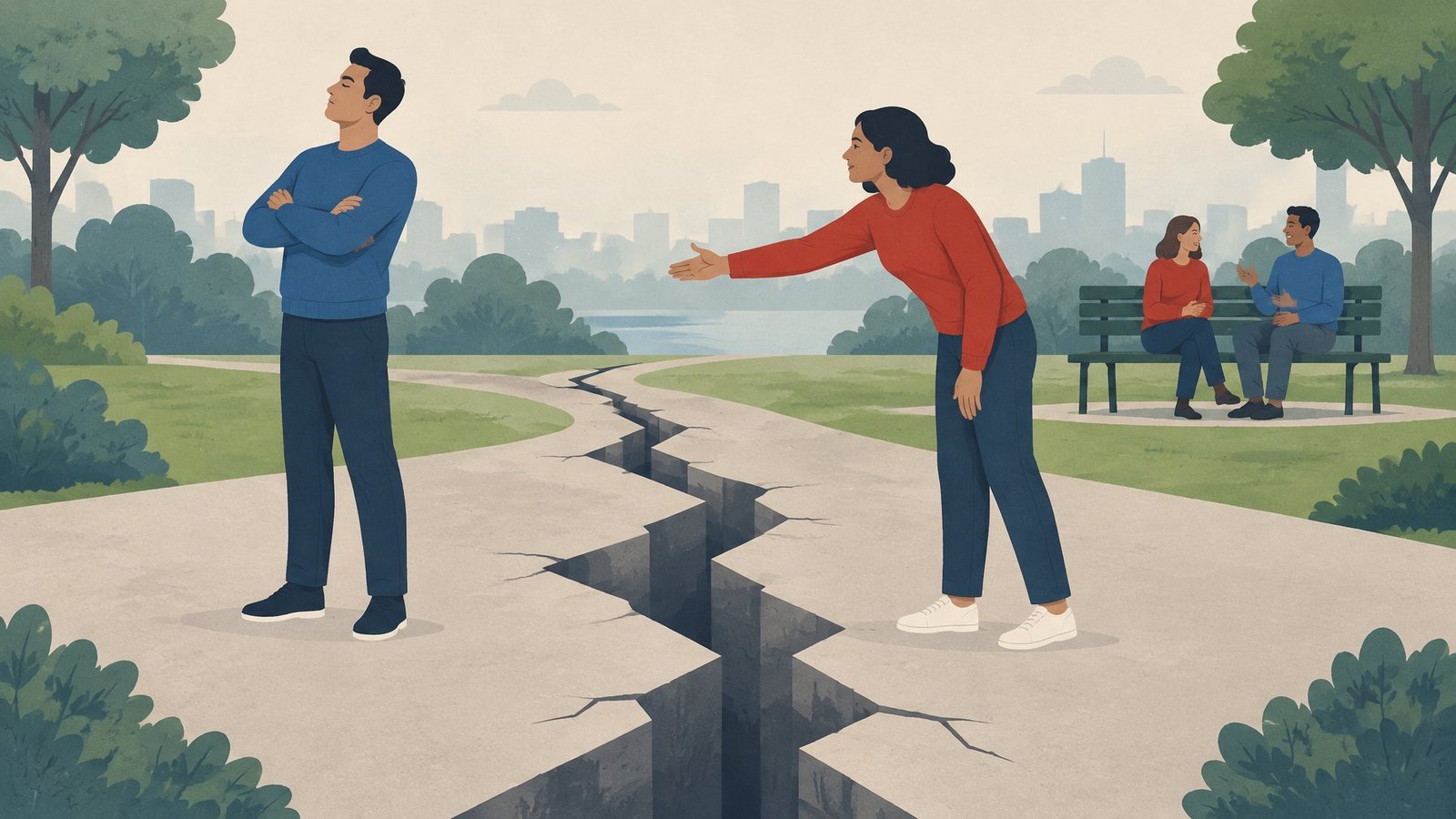
Feeling confident about politics is usually counted as a civic virtue. A US study finds a darker side: the people most certain they understand politics are also the most hostile to the other party and the most willing to accept discrimination against its supporters.
General self-worth works the other way. People with higher self-esteem were more tolerant of political opponents, and those with low self-esteem were the most willing to treat people differently because of their politics.
The paper is by Carey E. Stapleton of the University of Massachusetts Amherst and Jennifer Wolak of Michigan State University. It was published online in Public Opinion Quarterly on March 19, 2024.
Two kinds of confidence, measured separately
The authors used a module of the 2020 Cooperative Election Study, answered online by 1,000 Americans. Political self-confidence, which political scientists call internal political efficacy, was measured by asking whether people feel they understand political issues and are well qualified to take part in politics.
General self-esteem was measured indirectly, by asking how much people like their own first and last names. The two measures were essentially unrelated, with a correlation of 0.03.
The models controlled for education, news consumption, political knowledge, strength of party loyalty, how consistently liberal or conservative people’s policy views were, belief that politicians listen, gender, race, ethnicity and age.
Confidence fuels dislike of the other party, not love of one’s own
Going from the lowest to the highest political self-confidence was linked to a nine-point rise in affective polarization, the gap between how warmly people rate the two parties. That rise came entirely from colder feelings toward the opposing party, which dropped about seven points. Feelings toward one’s own party did not change.
The confident also pulled away socially. The predicted chance of having blocked someone on social media over politics was 8% at the lowest level of political self-confidence and 39% at the highest. They were also more likely to say they avoid political talk with people who disagree, and more likely to agree that treating people differently because of their party is acceptable.
Self-esteem showed the reverse pattern. The chance of having blocked someone fell from 46% at the lowest self-esteem to 22% at the highest, and tolerance for partisan discrimination fell from 0.36 to 0.27 on a 0 to 1 scale.
A rejected intern
After the election, respondents read about a woman screening internship applications who rejects an applicant. In some versions the applicant led a College Democrats or College Republicans group; in the control version, a nonpartisan club.
Most people disapproved. Acceptability averaged 0.22 on a 0 to 1 scale in the control version and 0.18 when the rejected applicant shared the respondent’s party, but rose to 0.29 when the applicant was from the other party.
Political self-confidence made a large difference. The predicted acceptability of rejecting an out-party applicant was 0.08 for the least confident and 0.38 for the most confident. Asked whether they would do the same themselves, the figures were 0.12 and 0.44. Self-esteem did not change how people reacted to the scenario.
The authors caution that this part of the analysis cannot prove cause and effect. Their conclusion is pointed all the same: “Those who feel most empowered within politics are among the most likely to express partisan hostilities.” The less sure people felt about politics, the more willing they were to stay friends with those who vote the other way.
Study Details:
- Title: Political Self-Confidence and Affective Polarization
- Authors: Carey E. Stapleton, Jennifer Wolak
- Journal: Public Opinion Quarterly
- Publication Date: March 19, 2024
- DOI: 10.1093/poq/nfad064