
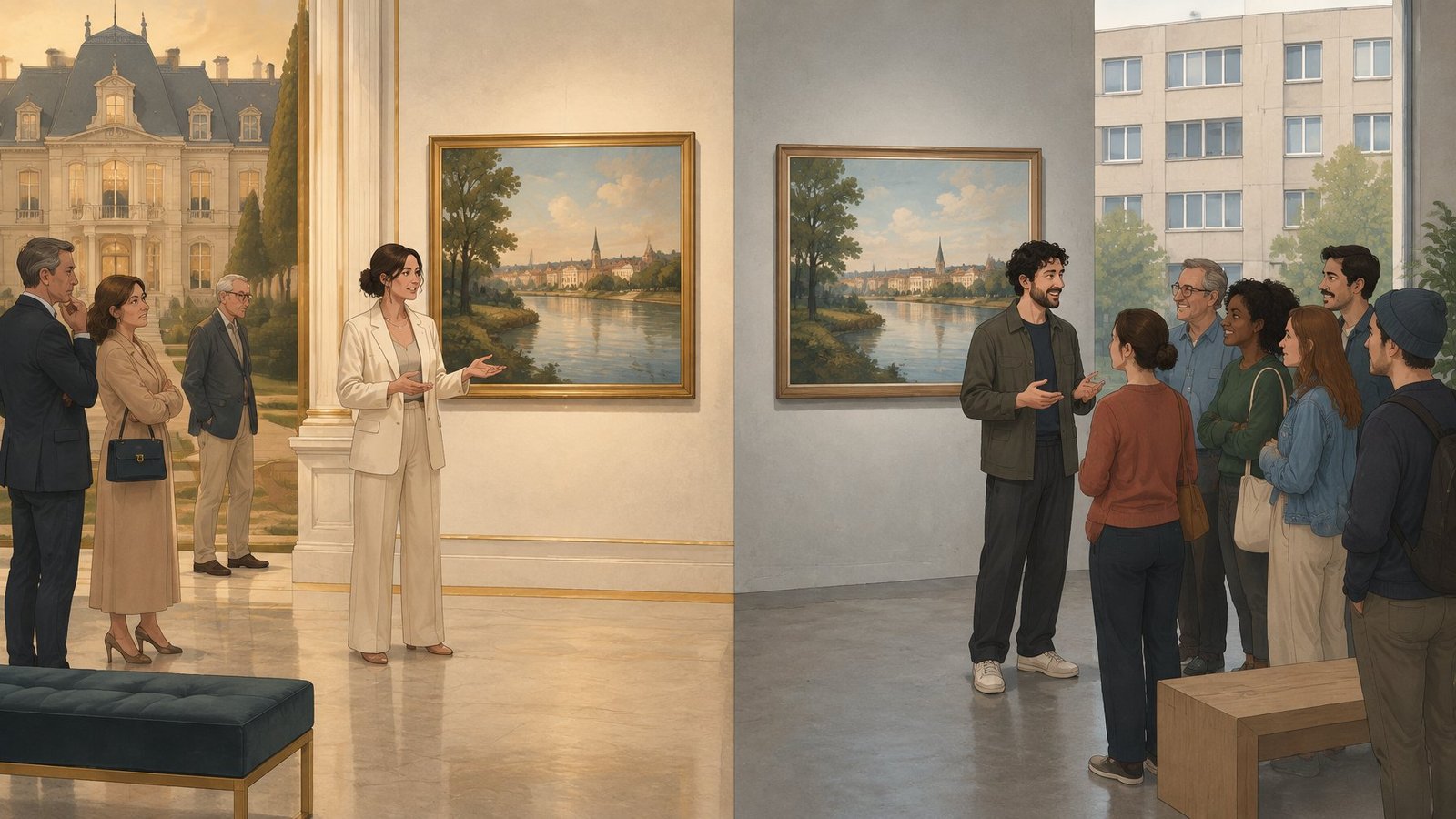
People cannot choose the circumstances of their birth, yet those born with advantages pay a price in how others see their work. A set of five studies finds that creators from privileged origins are judged less authentic, and that this drags down ratings of what they create.
The research is by Lan Anh Ton of Texas Christian University, Rosanna Smith of the University of Illinois Urbana-Champaign and Ernest Baskin of Saint Joseph’s University. It was published online in the Journal of Experimental Social Psychology on August 6, 2025, in the November 2025 issue.
Privilege muddies the link to the work
The authors propose that privilege creates doubt about where a creation really comes from. Is it a true expression of the person, or a product of their advantages? That ambiguity weakens the connection between maker and work.
In the first two studies, people born with high privilege, in the form of either wealth or beauty, were seen as less authentic than people with low or moderate privilege. That lower authenticity in turn reduced how highly their creations were rated.
A third study tested the mechanism. High privilege made people less likely to attribute the creation to the individual, and that lower attribution explained the drop in perceived authenticity.
Owning up does not help
In the fourth study, the penalty remained even when the privileged person openly acknowledged their advantages.
The fifth study found one way the effect weakened: mixed privilege. Creators with high wealth but low beauty, or low wealth but high beauty, faced a smaller authenticity penalty than those privileged on both counts.
For someone born rich and good-looking, then, naming the advantage did not remove the discount on their work in these studies. Only having one advantage instead of two did.
Study Details:
- Title: Privileged origins taint perceived authenticity
- Authors: Lan Anh Ton, Rosanna Smith, Ernest Baskin
- Journal: Journal of Experimental Social Psychology
- Publication Date: August 6, 2025
- DOI: 10.1016/j.jesp.2025.104809