Lab Grown Chicken: The Future of Sustainable Meat Production
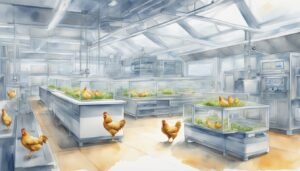
A scientific breakthrough in cultivating chicken from animal cells, lab-grown chicken offers a sustainable alternative to traditional farming practices.

Advancements in science and technology, such as AI, medical innovations, and the impact of technology on society and individual behaviors.
A scientific breakthrough in cultivating chicken from animal cells, lab-grown chicken offers a sustainable alternative to traditional farming practices.

GPS, developed during the Cold War for satellite navigation, saw key contributions from Ivan Getting, Roger Easton, and Gladys West, transitioning from military use to essential civilian applications.

Blue hydrogen uses natural gas, producing hydrogen while capturing CO2, offering a lower-carbon option compared to traditional methods.

The aviation speed evolution began with the Wright Brothers, leading to Chuck Yeager breaking the sound barrier in 1947.

Revolutionary advancements in science are reshaping our world, from the minuscule powerhouses within our cells to the vast complexities of space.

Robotic arm prosthetics merge advanced engineering with biomechanics to enhance amputees' lives by restoring functionality.

The development of the steel plow marks a significant milestone in agricultural history, fundamentally changing farming practices, particularly in the rich soils of the American Midwest.

Data engineering focuses on infrastructure and data management, while data science emphasizes extracting insights through statistical and machine learning methods.

Understanding AI's evolution and its integration into daily life reveals its growing impact on industries, everyday tasks, and societal norms.

In 2021, Facebook rebranded to Meta to focus on creating the metaverse, beyond just social media.