
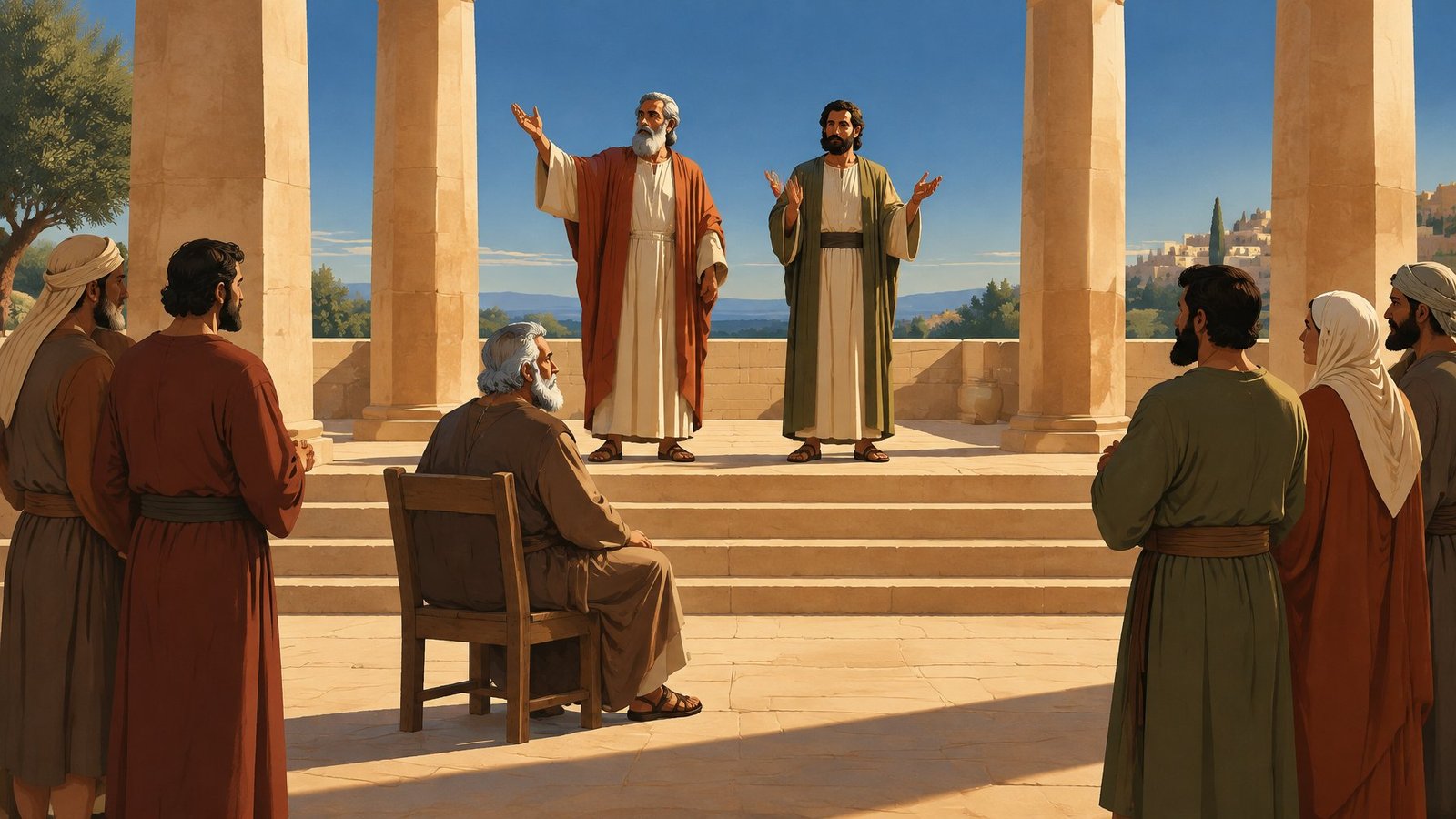
Today a witness tells the court what happened and a judge decides what it means. In much of the ancient world, a new study argues, the witness was the one who decided.
The article is by legal historian Orit Malka. It was published online on July 22, 2025, in Law and History Review, the journal of the American Society for Legal History.
Malka names two models. In what she calls the instrumental paradigm, which dominates modern thinking, testimony is evidence that a judge weighs. In the authoritative paradigm, which she finds in ancient texts, witnesses themselves hold the power to adjudicate.
She argues that the shift from the second model to the first is an unrecognized revolution in the history of legal thought.
Verdicts that waited for a witness
Her first set of sources are rules that tie verdicts to testimony. Litigation records from the temple district of Uruk in the sixth century BCE set a penalty in advance that would apply only “on the day that a witness comes and establishes” the case.
In one example, a slave accused of stealing temple barley would repay thirty times its value if a witness came forward, and would be cleared if none did. Scholars have long argued over whether such records were summonses awaiting trial or conditional verdicts that needed no further ruling.
The Gortyn Code, a fifth-century BCE law inscription from Crete, poses the same puzzle. In a dispute over ownership of a slave, the judge must rule according to the witness if one testifies. Only when witnesses conflict or are absent does the judge swear an oath and decide on his own.
The code even uses different verbs for the two situations: one for giving judgment bound to testimony, another for deciding at the judge’s discretion.
Words for witness that meant judge
Language points the same way. In Akkadian, one word for witness, šibu, literally means elder, and elders formed a communal judicial body. Translators choosing between the two meanings, Malka argues, have been guided by modern assumptions.
Oaths offer a third clue. Ancient oaths routinely called gods as witnesses, and those gods were expected to punish anyone who swore falsely.
In Genesis, Laban tells Jacob that God is a witness between them, then asks the gods of their fathers to judge between them. In a Roman declaration of war, the gods were called as witnesses that the enemy was unjust, with the expectation that they would deliver victory.
A flexible courtroom
Malka makes an exception for classical Athens, where witnesses seem to have held little authority. She also stresses that kings, priests, professional judges and juries held real judicial power in antiquity too.
Her claim is that witnesses often shared that power, consistently enough across cultures to count as a pattern rather than a quirk. How the two models coexisted, and how one came to dominate, she leaves as an open question.
Her conclusion is that the familiar three-part trial of litigants, witnesses and judges is not fixed. The roles within it have been divided very differently before.
Study Details:
- Title: Witnesses, Judges: A Revolution Untold
- Authors: Orit Malka
- Journal: Law and History Review, Volume 43
- Publication Date: July 22, 2025
- DOI: 10.1017/S073824802500001X