
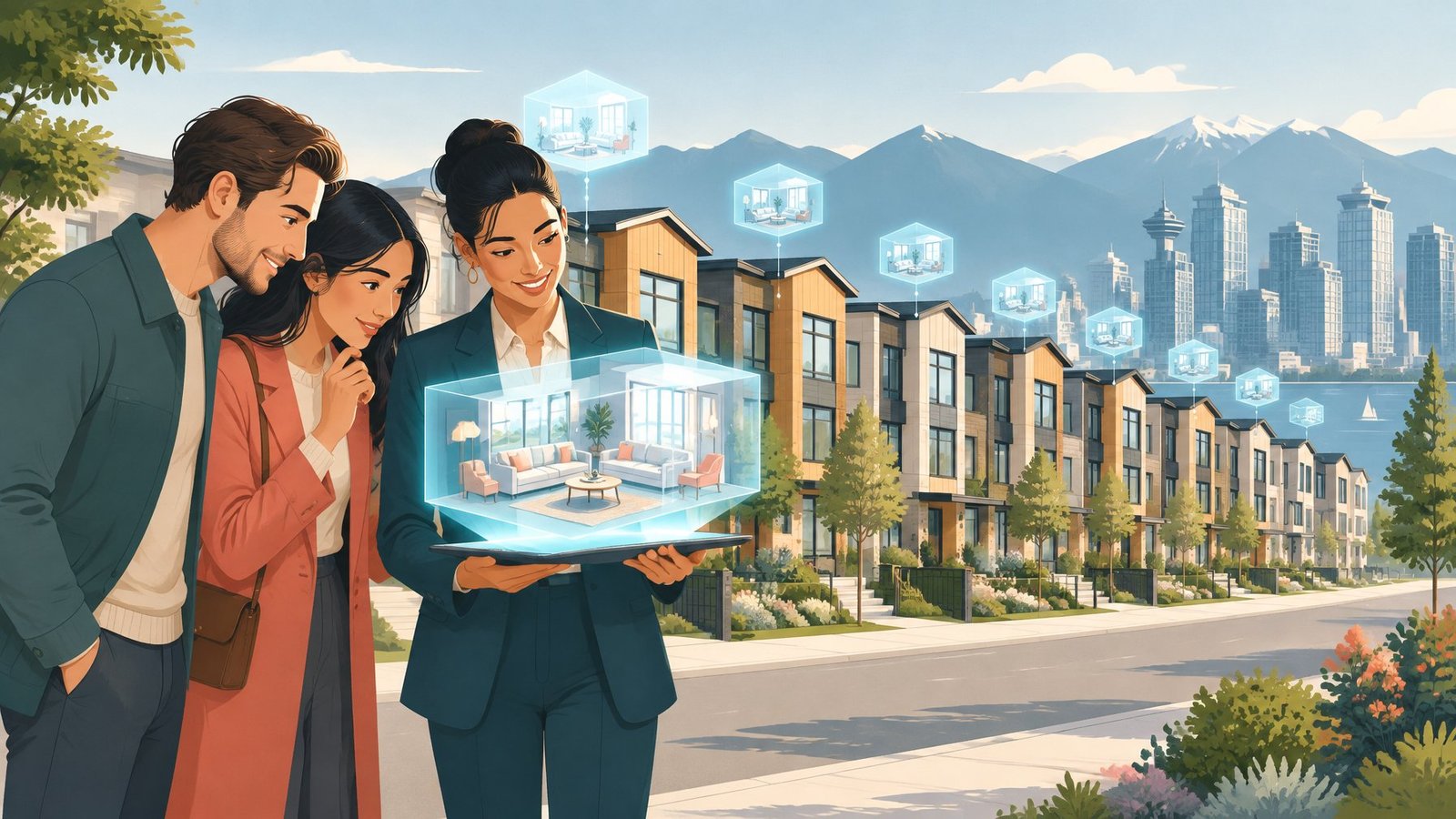
A virtual tour can add about 1% to a home’s sale price, but the advantage shrinks once every listing has one. That is the conclusion of a study of nearly 200,000 home sales in Vancouver, which tracked what happened when virtual tours went from a novelty to the norm.
The paper is by Miremad Soleymanian of Simon Fraser University and Yi Qian of the Sauder School of Business at the University of British Columbia. It was released as NBER Working Paper No. 33204 in November 2024.
Ten years of Vancouver listings
The authors combined Multiple Listing Service data on 197,345 attached home sales in Greater Vancouver from January 2011 to August 2021 with government assessed values and details on the listing agents, then focused on the City of Vancouver. Their main yardstick was how far a home’s sale price beat its official assessment.
Virtual tours were not handed out at random. Homes that offered them were more likely to be renovated or luxurious, so a simple comparison would mislead. The team used instrumental variables, such as an agent’s past use of virtual tours, along with a causal machine learning method called causal random forests, to isolate the effect.
Across these approaches, a virtual tour raised the sale price by about 1% on average.
From novelty to standard
The pandemic transformed the picture. Before COVID-19, about 25% of listings offered a virtual tour. After the first quarter of the pandemic, the share doubled to over 50% and then settled at about 47%.
The payoff fell along with the novelty. Comparing six months before and after the pandemic began, the effect of a virtual tour on sales performance dropped, and across the full period its effectiveness declined year by year. The authors read this as a salience effect: once a feature is everywhere, it no longer makes a listing stand out.
Where tours still help
The effect varied a lot from home to home. Virtual tours did more for renovated homes and for buildings 30 to 55 years old, where buyers face more uncertainty. They did less for highly unusual properties with few comparable homes nearby, which may benefit more from drawing buyers to see them in person.
Market conditions mattered too. Tours were more effective in hot markets, where many buyers compete for few listings and a stand-out feature can speed up decisions.
Junior agents gained the most. Agents with fewer years of experience, and those less used to selling in a particular neighbourhood, saw bigger benefits than veterans, suggesting tours can help newcomers compensate for thinner local knowledge.
The authors note that they could not observe online engagement, such as page views or time spent on a listing, so they cannot show exactly how tours change buyer behaviour before a sale. They suggest agents pair virtual tours with newer features to keep an edge now that tours alone have become standard.
Study Details:
- Title: From Novelty to Norm: Uncovering the Drivers of Virtual Tour Effectiveness in Real Estate Sales
- Authors: Miremad Soleymanian, Yi Qian
- Journal: NBER Working Paper No. 33204
- Publication Date: November 2024
- DOI: 10.3386/w33204