
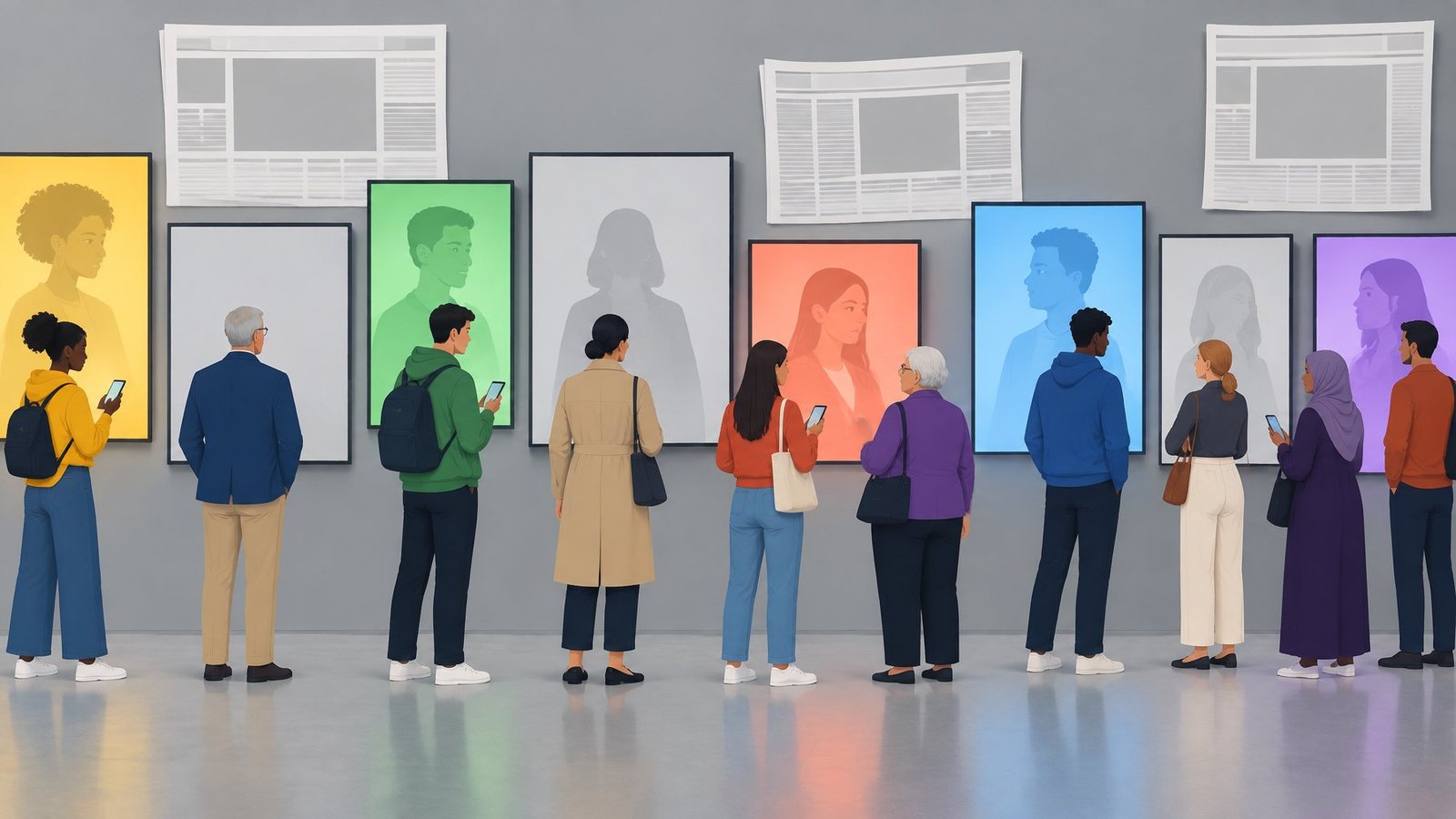
Most people around the world say they want their news impartial. But a large survey across 40 markets finds that several overlapping groups are more likely to prefer news that shares their own point of view: the politically engaged and ideological, young people who get news mainly from social media, women, and people with less education and lower incomes.
The study is by Camila Mont’Alverne of the University of Strathclyde, Amy Ross A. Arguedas and Richard Fletcher of the University of Oxford, Sumitra Badrinathan of American University, Benjamin Toff of the University of Minnesota and Rasmus Kleis Nielsen of the University of Copenhagen. It was published in the International Journal of Communication on March 29, 2025.
One question, 80,000 answers
The authors used data from the Reuters Institute’s 2020 Digital News Report, an online survey of 80,155 people carried out by YouGov in January and February 2020 across the Americas, Europe, Asia and Africa.
Respondents were asked whether they preferred news from sources that share their point of view, sources without a particular point of view, sources that challenge their view, or did not know. The researchers then used multilevel models to see which personal characteristics predicted each answer while accounting for differences between countries.
Impartial news came out on top overall. In 26 of the 40 countries, most respondents said they preferred news with no particular point of view. Turkey was the only country where more than half said they preferred news that shares their view.
Who drifts from neutrality
Political engagement was one clear factor. People with more interest in politics, those who consumed news more often, and those placing themselves on either the left or the right were less likely to choose impartial news and more likely to choose news that matched their outlook.
Younger respondents, and those relying mainly on social media for news, also leaned toward like-minded news. People who mainly used online news websites leaned the other way.
Women, people with less formal education and those from lower-income households were also somewhat more likely to prefer news reflecting their view. The authors stress that effect sizes were generally small.
They suggest different groups may have different reasons. Politically engaged partisans may seek like-minded sources on top of the impartial news they already consume. For less advantaged groups, the preference may express frustration with coverage that claims neutrality but seems to favor more privileged parts of society, or a wish for news that portrays people like them more fairly.
Countries matter too
At the national level, preferences for impartial news were lower in markets where people used more different news sources on average and where journalists saw themselves as less independent from political influence. Support for impartial news was higher in countries rated as having higher-quality democracies.
The authors caution that these country patterns come from simple correlations and that country data were not available for all 40 markets. They also note that answers may reflect the news people actually have access to, so preferences could shift as media environments change.
They point to the United Kingdom as an example: it is impossible to tell from the data whether support for “no point of view” there reflects audience taste, the dominance of the BBC, which is required to be impartial, or the relative health of British democracy.
Study Details:
- Title: Who Wants Impartial News? Investigating Determinants of Preferences for Impartiality in 40 Countries
- Authors: Camila Mont’Alverne, Amy Ross A. Arguedas, Sumitra Badrinathan, Benjamin Toff, Richard Fletcher, Rasmus Kleis Nielsen
- Journal: International Journal of Communication
- Publication Date: March 29, 2025
- Link: https://ijoc.org/index.php/ijoc/article/view/23816