
Walk through almost any large European city today and you will notice the change. Supermarket shelves carry more plant-based alternatives, restaurant menus mark vegan dishes as a matter of course, and some cities have started to shape food policy around reducing meat. This shift is driven by a mix of climate science, health research and changing urban culture.
Amsterdam offers a useful case study of how these forces come together.
The climate case
Food production is responsible for a large share of global greenhouse gas emissions, and animal products, particularly beef and dairy, account for a disproportionate part of that footprint. Life-cycle studies consistently find that plant-based protein sources such as beans, lentils and peas produce far lower emissions per gram of protein than most meat.
In 2019, the EAT-Lancet Commission, a group of scientists from multiple fields, proposed a “planetary health diet” that is rich in plants and includes only modest amounts of meat and dairy. Their argument was that such a diet could feed a growing population within environmental limits while also improving health. The report has been debated, but it has shaped how many policymakers talk about food.
The health case
Large observational studies link diets rich in vegetables, whole grains, legumes and nuts with lower rates of heart disease, type 2 diabetes and some cancers. Dietary guidelines in many European countries now recommend eating more plant foods and less red and processed meat.
Plant-based does not automatically mean healthy, though. Highly processed meat substitutes can be high in salt. Nutrition researchers generally emphasise whole foods over products designed to imitate meat.
The policy case: the Netherlands and the protein transition
The Netherlands has embraced the idea of a “protein transition”, a gradual shift in the balance of protein from animal to plant sources. The topic appears in national food policy discussions and in the plans of several cities. The nearby city of Haarlem drew international attention when it decided to ban advertising for meat in public spaces.
The Dutch food industry has also played a role. The country is home to companies that helped popularise plant-based meat alternatives across Europe, and Dutch universities, including Wageningen University & Research, are leading centres of food science.
The cultural case: cities as testing grounds
Cities tend to adopt new food trends faster than rural areas. They have younger populations, more international residents and dense restaurant scenes where chefs can experiment. In Amsterdam, vegan bakeries, plant-based fine dining and vegetable-focused menus sit alongside traditional Dutch food.
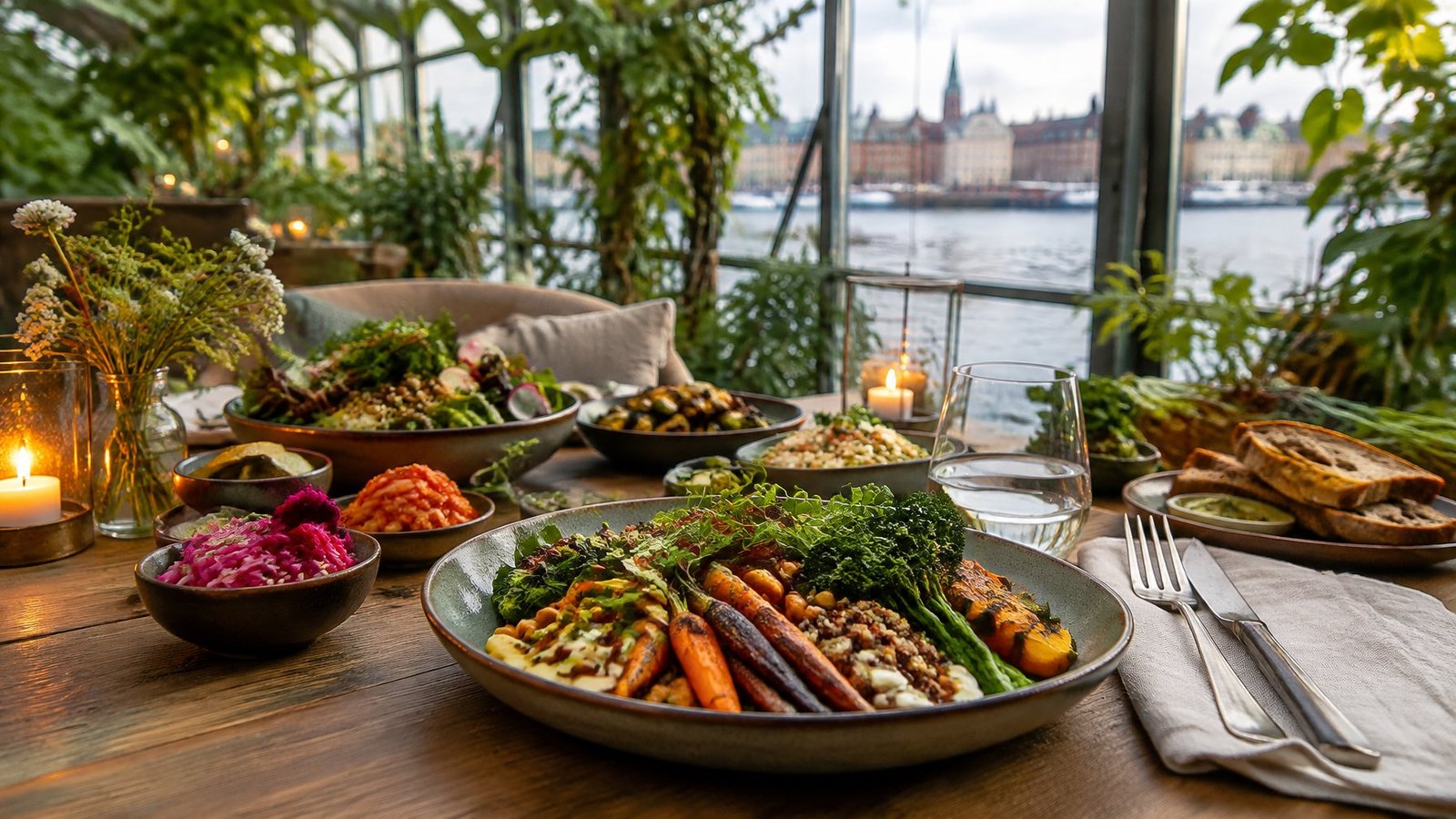
One example is TestTafel, a plant-based restaurant in a waterfront greenhouse on the Mediamatic terrain at Dijksgracht. It serves a seasonal vegan tasting menu built around fermentation and local produce, and dinner there helps fund affordable meals at De Sering’s community kitchen. That combination of experimentation, seasonality and social purpose is typical of how the movement looks in Amsterdam.
Traditional cuisines were never meat-heavy
Part of the growth in plant-based eating is a rediscovery of older traditions. Many Mediterranean cuisines rely heavily on vegetables, pulses, grains and olive oil, with meat as one element among many. Greek mezze, for example, includes plenty of dishes built around vegetables, beans and yoghurt.
In Amsterdam, Oresti’s Taverna on the Overtoom is a Mediterranean café-restaurant with Greek dishes at its core, bringing together mezze, tapas and antipasti in a relaxed setting. Shared small plates make it easy for groups with different diets to eat together, which is one reason this style of eating has become so popular in mixed company.
What the shift looks like for diners
For people living in or visiting European cities, the practical result is more choice. It is easier than ever to eat a mostly plant-based diet without cooking every meal at home. If you want to explore Amsterdam’s options, this guide to vegetarian and vegan food in Amsterdam is a helpful starting point.
Flexitarians drive the change
Surveys across Europe suggest that the biggest group behind the shift is not strict vegans but flexitarians: people who still eat meat but choose plant-based meals several days a week. This matters for both business and climate. Restaurants and supermarkets respond to demand from the many, not the few, and small changes by a large group can add up to a larger drop in meat consumption than a small group giving it up completely. In cities with many international residents and young professionals, flexitarian eating has become a normal part of daily life rather than a statement.
Open questions for researchers
Several questions remain. How much does eating less meat in cities change total emissions if production simply shifts elsewhere? Will plant-based alternatives keep improving in taste and nutrition? And how can the transition be made affordable for people on lower incomes, so it does not become a lifestyle choice only for the well-off?
These questions are now part of active research in nutrition science, economics and environmental policy.
The bottom line
Plant-based eating in European cities is growing because several trends point in the same direction: climate science, health evidence, food policy and urban culture. Amsterdam shows how those forces combine in practice, from national debates about protein to a greenhouse kitchen by the water. For most people, the change does not mean giving up meat entirely. It means putting plants closer to the centre of the plate.