Picture of an Atom: A Glimpse into the Microscopic World
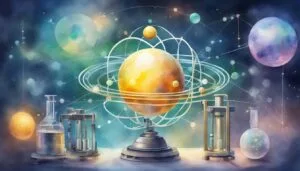
This article examines how advanced electron microscopy techniques enable the high-resolution imaging of atoms, overcoming challenges like particle movement and sample complexity.

This article examines how advanced electron microscopy techniques enable the high-resolution imaging of atoms, overcoming challenges like particle movement and sample complexity.

States of matter are classified into solids, liquids, gases, and plasma, each displaying unique properties influenced by particle interactions, temperature, and pressure.

Energy is the capacity to do work or produce change, existing in forms like kinetic, potential, chemical, and more, and follows the conservation law.

Poisons affect the body through various mechanisms, targeting organs and systems and potentially causing severe health issues or death.
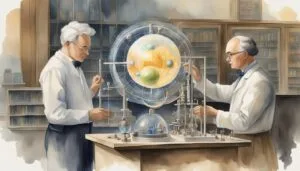
Atoms are basic building blocks of matter, consisting of a nucleus with protons and neutrons and surrounded by an electron cloud.

The transformation of carbon into diamond is a result of extreme pressures and temperatures deep within the Earth's mantle, leading to the unique physical characteristics of diamonds.

Roller coasters originated in 17th century Russia and evolved from ice slides to modern engineering marvels.

Polymers are large molecules formed by bonding smaller monomers, essential in both natural and synthetic forms.

Understanding gravity involves delving into the foundational principles established by Isaac Newton and later expanded upon by Albert Einstein, revealing it as a force shaping both our earthly existence and the vast cosmos.

Thermoelectricity harnesses physics to convert temperature differences directly into electrical energy, leveraging materials such as semiconductors to facilitate this energy transformation.