Titanium: Essential Properties and Applications Explored

Titanium was discovered in 1791 by William Gregor in Cornwall, England, and named by Martin Klaproth in 1795.

Titanium was discovered in 1791 by William Gregor in Cornwall, England, and named by Martin Klaproth in 1795.

Hydrogen, discovered by Henry Cavendish in 1766, is the most abundant element in the universe and forms water when reacted with oxygen.

Silicon, essential for modern technologies, conducts electricity and is pivotal in electronics and construction.

Light, behaving as both wave and particles, is essential for life and drives technological and biological processes.
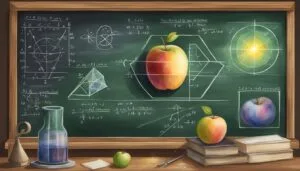
Isaac Newton, a key figure in mathematics and physics, authored the Principia, establishing foundational laws of motion and universal gravitation.
Lead is a dense, malleable, soft metal (Pb, atomic number 82), used in batteries, solders, and radiation shielding but reduced in use due to toxicity.

Measuring light is crucial in understanding its interactions with the environment, covering what, why, and how of quantifying this pervasive form of energy.

Radioactivity is a fundamental property of certain elements on the periodic table, marked by the emission of radiation from an unstable nucleus. This process can lead to the transformation of one element to another and plays a crucial role both in nature and in various industries.

A catalyst speeds up chemical reactions without changing permanently, reducing activation energy needed for reactions.

Vacuum cleaners function by creating a pressure difference that sucks in air along with dirt, utilizing various components and designs suitable for different surfaces.