Facts About the Atlantic Ocean: Exploring Its Wonders and Mysteries

The Atlantic Ocean is the world's second-largest ocean, notable for features like the Mid-Atlantic Ridge and diverse marine life.

The Atlantic Ocean is the world's second-largest ocean, notable for features like the Mid-Atlantic Ridge and diverse marine life.

Covering 60 million square miles, the Pacific Ocean is Earth's largest and deepest ocean, featuring complex seabed topography and connecting continents via crucial sea routes.
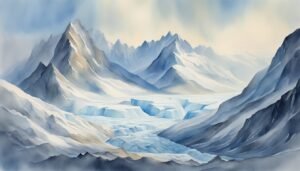
Ice ages are mainly caused by Milankovitch cycles, changes in atmospheric CO2, and continental layouts affecting climate.

Natural disasters are sudden, extreme events caused by environmental factors, categorized into geological, meteorological, hydrological, and climatological types, each having specific origins and effects on humans and the environment.

Jamaica is located in the Greater Antilles, south of Cuba and west of Hispaniola, featuring rugged landscapes with mountains like the Blue Mountains and diverse landforms such as limestone plateaus.

An earthquake is the sudden shaking of Earth's crust due to blocks slipping past each other along a fault, releasing energy.
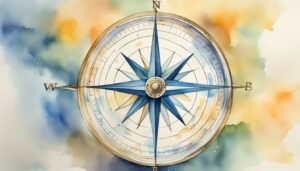
Magnetic pole shifts, involving the reversal of magnetic north and south, reflect the complex, changing dynamics within Earth's core.

Prospecting for gold can be as simple as grabbing a pan and heading to a local stream, but there is actually quite a bit of science and technique behind finding this precious metal.
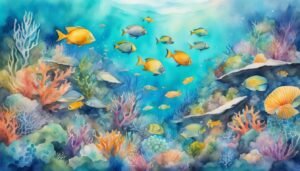
Technological advances have significantly enhanced the capability to explore and map the ocean depths, enabling detailed studies of marine ecosystems.

Frying Pan Shoals, notable for its marine biodiversity and history of shipwrecks, stretches 28 miles off North Carolina’s coast.