5 Major Extinctions: Unraveling Earth’s Pivotal Crises

Mass extinctions are abrupt events that drastically reshape global biodiversity, involving major species losses.

Mass extinctions are abrupt events that drastically reshape global biodiversity, involving major species losses.

The Nile River, essential for Egypt's agriculture, stretches 6,650 km from Central Africa to the Mediterranean, forming fertile lands and the populous Nile Delta.

The science of earthquake prediction focuses on estimating seismic event likelihood using seismology and data analysis.

Son Doong Cave's exploration highlights its massive size and unique ecosystem, enhancing tourism and scientific knowledge.

The Great Plains is a large, flat expanse located east of the Rocky Mountains, known for diverse ecosystems and a history of early inhabitants and exploration.

Idaho, located in the northwestern U.S., borders six states and features mountains and the vital Snake River.

Cold is measured using Celsius or Fahrenheit; extreme low temperatures affect Earth's climate and ecosystems.

Louisiana, the 31st largest U.S. state, features a diverse landscape of marshes, swamps, and forests, and has a multicultural population of 4.65 million.
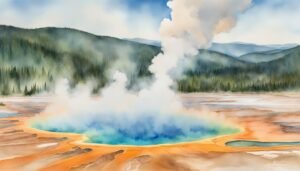
Grand Prismatic Spring is known for its size and colorful thermophiles, underpinned by volcanic activity.

The article discusses various explorative missions to the North Pole, highlighting historic voyages, technological advances, and significant geographical discoveries.