How Much of the Ocean Has Been Explored? Unveiling the Depths of Our Blue Planet

As of 2024, only a fraction of Earth's oceans have been thoroughly explored, despite ongoing technological advancements.

As of 2024, only a fraction of Earth's oceans have been thoroughly explored, despite ongoing technological advancements.

Turkey is uniquely transcontinental, spanning Asia (97%) and Europe (3%), divided by straits such as the Bosporus.

A hurricane is a powerful tropical cyclone over warm waters, named differently based on location, with varying intensity by the Saffir-Simpson scale.

Earth's magnetic poles are crucial for its protective magnetosphere, which shields us from solar wind and are prone to shifting and reversing over millennia.

The study of tectonic plates is fundamental to understanding how Earth's surface is shaped and continuously reshaped over geological time.

Exploration and technology reveal a myriad of unique life forms and ecosystems in the ocean's depths, expanding our understanding of Earth's biodiversity.

Canada, spanning 9.98 million square kilometers, is the world's second-largest country featuring diverse landscapes and seven geoclimatic regions.

The Atacama Desert, stretching over 1,000 miles in South America, is known for its extremely dry climate and diverse geography.

The Cabo Rojo Salt Flats in Puerto Rico blend scientific interest and outdoor activities, framed by nature's stunning diversity.
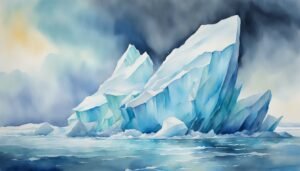
Icebergs are large freshwater ice masses that form by breaking off from glaciers or ice shelves, primarily categorized into tabular and non-tabular types.