Ancient Clay Cylinders Redefine Origins of Alphabetic Writing
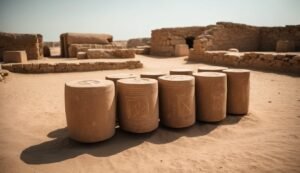
Recent excavations in Syria uncovered clay cylinders with early alphabetic writing, suggesting the alphabet's origins may date back to 2400 BCE, earlier than previously thought.

Recent excavations in Syria uncovered clay cylinders with early alphabetic writing, suggesting the alphabet's origins may date back to 2400 BCE, earlier than previously thought.

Astronomers discovered TIDYE-1b, the universe's youngest known planet at just 3 million years old, challenging traditional models of planetary formation.

Curtin University researchers found evidence of ancient hydrothermal activity on Mars through a 4.45 billion-year-old zircon, hinting at the potential for past life.

Warner Bros. is developing a revisionist remake of the 1956 sci-fi classic "Forbidden Planet," with Brian K. Vaughan writing and Emma Watts producing, generating mixed fan reactions.
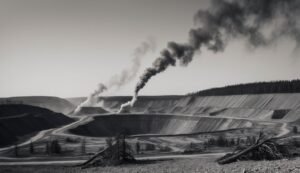
A study reveals mining has led to massive deforestation and CO2 emissions, urging urgent action to balance mineral demand with forest conservation.

NASA's new supercomputer simulation reveals the chaotic dynamics of the sun, enhancing our understanding of solar activity and its impact on Earth.

A study reveals that war alters the DNA of Syrian refugee children, uniquely impacting their mental health and development, with girls showing greater biological changes.

New OHSU research confirms the glymphatic system's role in clearing brain waste, paving the way for neurodegenerative disease prevention strategies.

Futarchy.fi, built on Ethereum, uses decision markets to improve governance by predicting organizational decisions' impacts, enhancing stakeholder alignment.

New research reveals that employees who witness a coworker getting caught for unethical behavior not only feel satisfaction, but actually go on to perform better at their own work.