Scientific Discoveries That Changed the World: Milestones in Human Progress
Key discoveries in genetics and medical innovations have reshaped biology and medicine, expanding understanding and improving health outcomes.

Key discoveries in genetics and medical innovations have reshaped biology and medicine, expanding understanding and improving health outcomes.

Bones are the last to decompose after death, impacted by various factors such as temperature, humidity, and microbial activity, with decomposition influenced by environmental conditions and external agents.
Time crystals are phases of matter that exhibit periodic motion in their ground state, maintaining constant movement without energy input.

TL;DR: Evolution is both a fact and a theory; it's a fact that evolution occurs and a theory explains how it happens.

Human body decomposition starts with autolysis and progresses through stages like putrefaction and active decay, influenced by temperature, moisture, and other environmental factors.
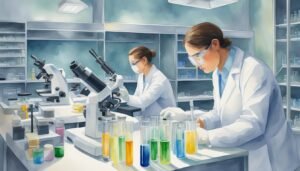
Forensic tests use diverse techniques to analyze samples for crime-solving, including DNA and toxicology analysis.

Causality, the link between causes and their effects, is essential for understanding the universe's interconnected events.
Friction is a force resisting the relative motion of interacting surfaces or elements, affected by material characteristics, surface roughness, and applied force.

Kentucky, part of Virginia, became the 15th U.S. state on June 1, 1792, after Boone facilitated settlements through the Cumberland Gap.
Conduction is the way heat transfers through materials and is a process fundamental to understanding how energy is distributed in the physical world.