
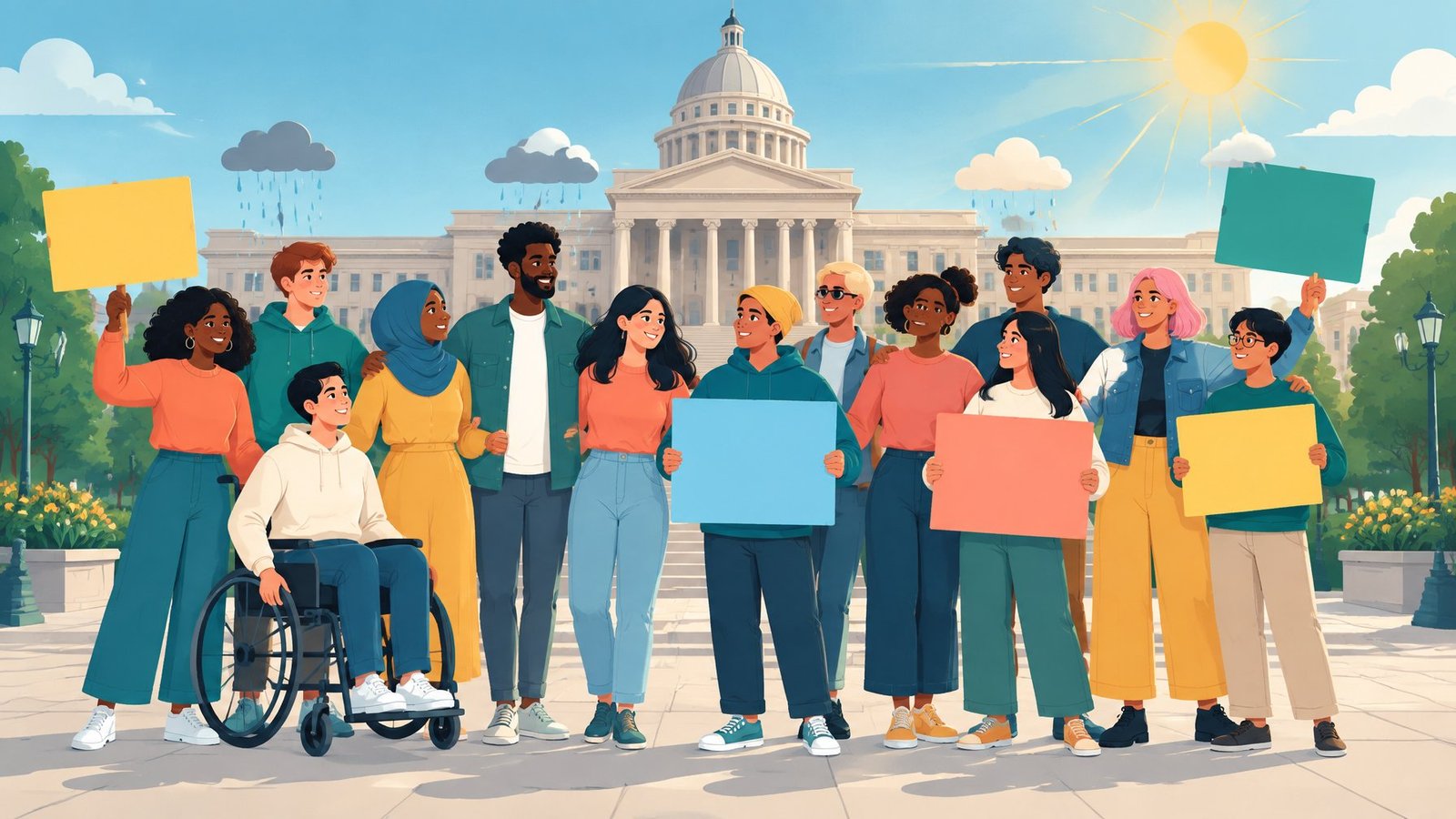
For a growing number of Americans, having had a mental illness is becoming a political identity, much as race, religion or gender are for others. In a national survey, people with stronger mental health identity were far more likely to want their state to spend more on healthcare, education and welfare.
The study, by political scientist Lauren Van De Hey of Utah State University, was published online on April 7, 2026, in Political Behavior. She describes it as the first study to test whether experiencing mental illness works as a political identity.
A survey built on identity politics research
Van De Hey placed a set of questions on the 2022 Cooperative Election Study, a national survey run by YouGov. Her module went to 1,000 Americans, of whom 860 answered the post-election wave in November 2022.
She adapted measures that political scientist Ashley Jardina developed to study white identity. Respondents who said they had ever had a mental illness were asked how important that identity was to them, how strongly they identified with others who had mental illness, whether such people should work together to change unfair laws, and whether American society discriminates against them.
About 26% of respondents said they had had a mental illness in their lifetime, compared with 22% for a physical disability and 20% for a serious chronic physical illness.
Strongest among the young and the liberal
People who had experienced mental illness felt close to others with the same experience and shared a sense of group consciousness. Younger respondents were more likely to place themselves in the group, as were college graduates, Democrats, liberals and white respondents. For strength of identity and feelings of alienation, ideology was the one factor that mattered: liberals scored higher.
The policy link was large. Holding other factors constant, people low on mental health identity had about a 56% predicted chance of wanting more state healthcare spending, against about 94% for those high on it. For the alienation scale, the jump was from about 38% to 91%. Similar results held for education and welfare, but not for law enforcement spending.
People with a strong mental health identity took part in politics at about the same rates as everyone else, so the group is neither withdrawn nor unusually active. The patterns also differed from those for physical disability and chronic physical illness, suggesting mental health is a distinct identity rather than part of a broader health one.
Van De Hey stresses that the data are observational and not causally identified, and that the findings need replication. Gen Z made up just 41 of the 860 respondents. Still, she expects mental health to remain an important political consideration as that generation ages.
Study Details:
- Title: Just a Little Melancholic, Maybe a Little Blue: Mental Health as an Emerging Political Identity
- Authors: Lauren Van De Hey
- Journal: Political Behavior
- Publication Date: April 7, 2026
- DOI: 10.1007/s11109-025-10118-3