
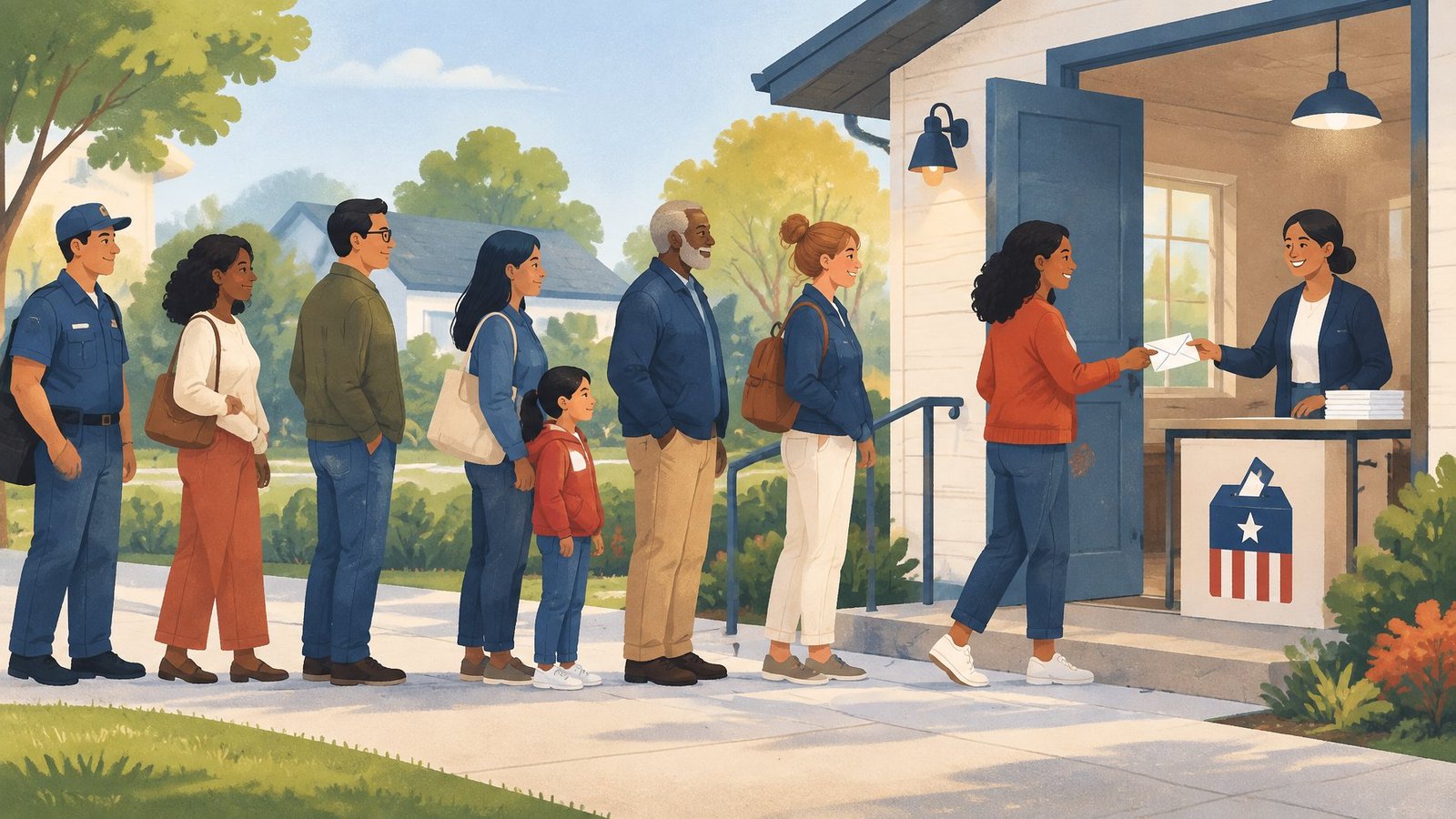
Governments could legally pay people to vote, and a small sum might do the most good among voters who usually stay home. That is the argument of a legal analysis proposing a $20 payment for casting a ballot in local elections.
The author, Andrew Albright, earned a law degree and a public policy master’s from the University of California, Berkeley, in 2024 and has worked as a federal judicial clerk. His Note appeared in the California Law Review in June 2025 and was posted on SSRN on July 21, 2025.
Why pay voters at all
Albright starts with a turnout gap. In the 2020 election, Americans in households earning under $10,000 voted at a rate of 47 percent, while those earning over $150,000 voted at nearly 85 percent, according to census figures he cites.
Local elections are worse. Only 23 percent of New York City voters cast a ballot in the 2021 mayoral race, turnout in 463 North Carolina municipal elections in 2021 was 15 percent, and school board races typically draw 5 to 10 percent.
Because elected officials respond to the voters they see, he argues, this skew pulls policy toward the wealthy. Paying voters directly would bring new people into the electorate and shift who politicians think of as the median voter.
He frames low turnout in economic terms. The benefits of voting spread across society while the costs, such as travel, waiting and lost work time, land on the individual, a classic setup for free riding. A small cash reward works as a selective incentive, and he expects it to matter more to low-income people.
He compares the idea to Seattle’s democracy vouchers and to small-donor matching programs. Unlike those, a voter payment would cut out campaigns as middlemen.
Getting past the vote-buying ban
The obvious objection is that vote buying has been illegal across the United States since the Voting Rights Act of 1965. Albright argues that, based on the Act’s legislative history, a government program that rewards people for voting would still be legal under federal law.
He also argues that neither the First Amendment nor the Fourteenth Amendment stands in the way, and that a California local government could adopt such a program without breaking state law.
How he would design it
He proposes starting with a single local government before any statewide or federal version. The payment should be direct, visible and immediate, and he suggests offering it only in occasional elections rather than every time.
He also addresses objections, including the risk of perfunctory votes, rewarding people who would have voted anyway, cost and politicians claiming credit for the payments. The claim that $20 would move low-income voters more than wealthy ones is offered as a hypothesis, not a measured result.
One design choice stands out. Voters who cast a blank ballot would still collect the payment, so no one is paid to pick a candidate.
Study Details:
- Title: Pay the Voter: A Legal, Economic, and Policy Analysis of Financially Incentivizing Political Participation
- Authors: Andrew Albright
- Journal: California Law Review, Volume 113, pp. 801-846
- Publication Date: June 2025
- DOI: 10.2139/ssrn.5352812