
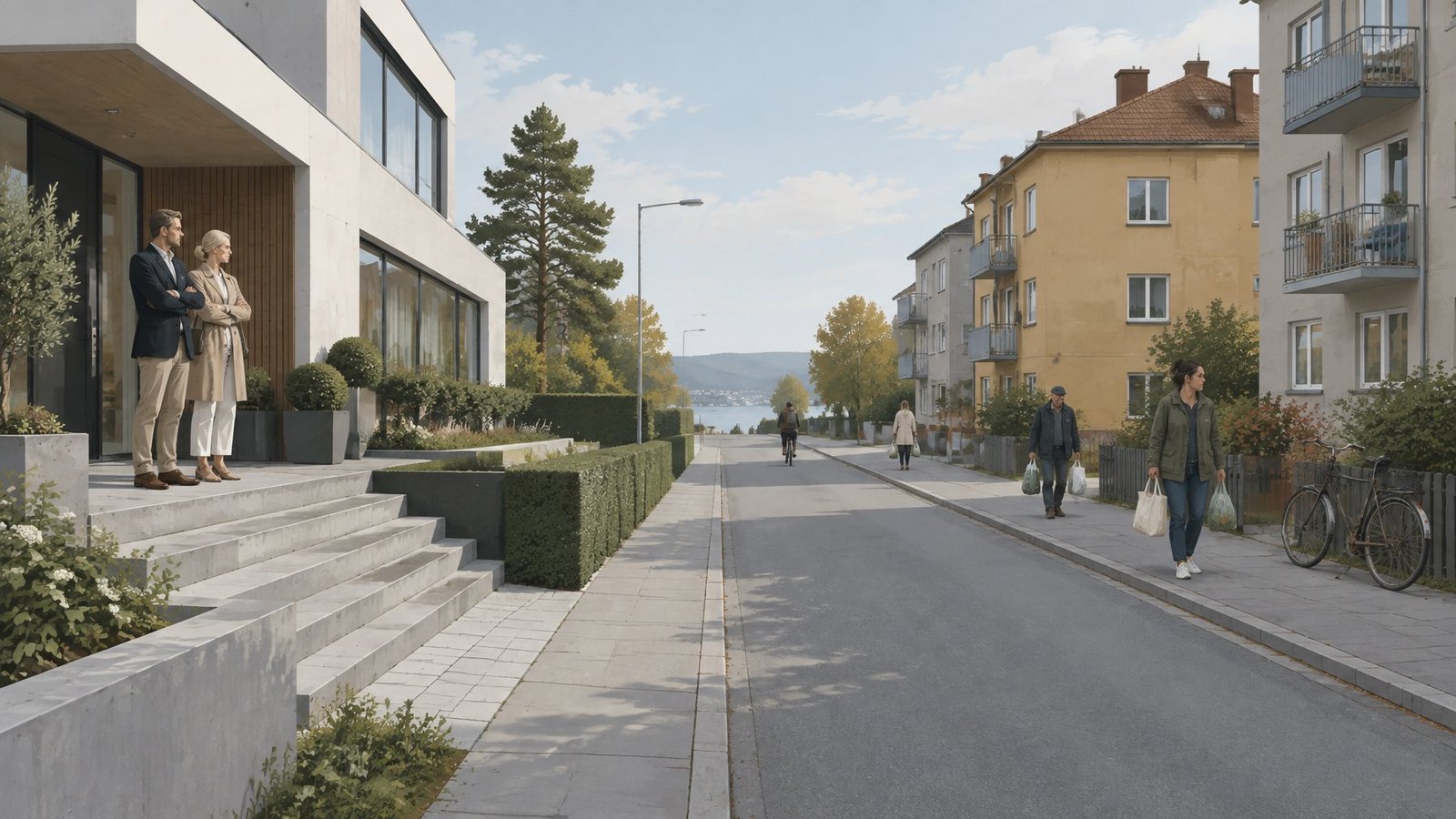
Wealthy people do not become more generous toward the poor when poverty moves closer to home. In Denmark, rich people whose immediate neighbourhoods gained more low-income residents became less supportive of government efforts to reduce income differences.
The study, by Matias Engdal Christensen, Peter Thisted Dinesen and Kim Mannemar Sønderskov, was published online in the British Journal of Political Science on April 15, 2024, as an open-access letter.
Two camps, two answers
Earlier research pointed in opposite directions. Most observational studies found that well-off people living near poorer people backed redistribution more, which fits the idea that contact builds sympathy. But a prominent field experiment in Boston found that placing a poor-looking person in affluent neighbourhoods made passers-by less willing to sign a petition for a millionaire’s tax.
The authors set out to explain the gap. One possibility is self-selection: rich people can choose where they live, and those already sympathetic to the poor may pick mixed neighbourhoods. The other is time: a fleeting encounter may provoke hostility, while years of living side by side may turn into real contact.
Following the same people for a decade
The team used a three-wave Danish panel survey collected in 2008/9, 2011/12 and 2017, and linked it to Statistics Denmark registry data on exactly where each respondent lived and the incomes of everyone around them. That let them measure the share of residents below the 20th percentile of national income inside circles as small as 100 meters around each home.
Support for redistribution came from the standard European Social Survey statement that the government should take measures to reduce differences in income levels. Instead of comparing different people, the main models tracked changes within the same individuals over time, removing stable traits such as personality from the picture.
For the richest fifth of respondents, more exposure to poor neighbours meant less support for redistribution. A one standard deviation rise in the local share of poor residents lowered support by 5.1 percentage points, slightly larger than the 4.4 point drop in the Boston experiment. For the other income groups, the effect was not statistically significant.
The effect showed up only in very small areas, up to a radius of a couple of hundred meters. It held when the researchers accounted for the share of rich neighbours, the local Gini coefficient and income diversity, and it was driven mainly by increases in exposure rather than decreases.
Why earlier studies saw the opposite
When the authors ran the same data as a snapshot, comparing different people at one point in time, the relationship flipped: rich people living among more poor neighbours appeared more supportive of redistribution. That pattern matches earlier cross-sectional studies and points to sorting rather than contact.
The authors argue that deep predispositions, such as personality traits or values that registry data cannot capture, likely lead more pro-redistribution wealthy people into mixed neighbourhoods. The poorest fifth showed no such reversal, which fits because they have far less choice about where to live.
The effect did not spread to broader politics. Exposure to poor neighbours had no clear effect on the rich respondents’ overall left-right ideology, and a placebo test found no effect on immigration attitudes. Among the poorest fifth, though, more poor neighbours generally increased support for redistribution.
Study Details:
- Title: Unequal and Unsupportive: Exposure to Poor People Weakens Support for Redistribution among the Rich
- Authors: Matias Engdal Christensen, Peter Thisted Dinesen, Kim Mannemar Sønderskov
- Journal: British Journal of Political Science
- Publication Date: April 15, 2024
- DOI: 10.1017/S0007123424000061