
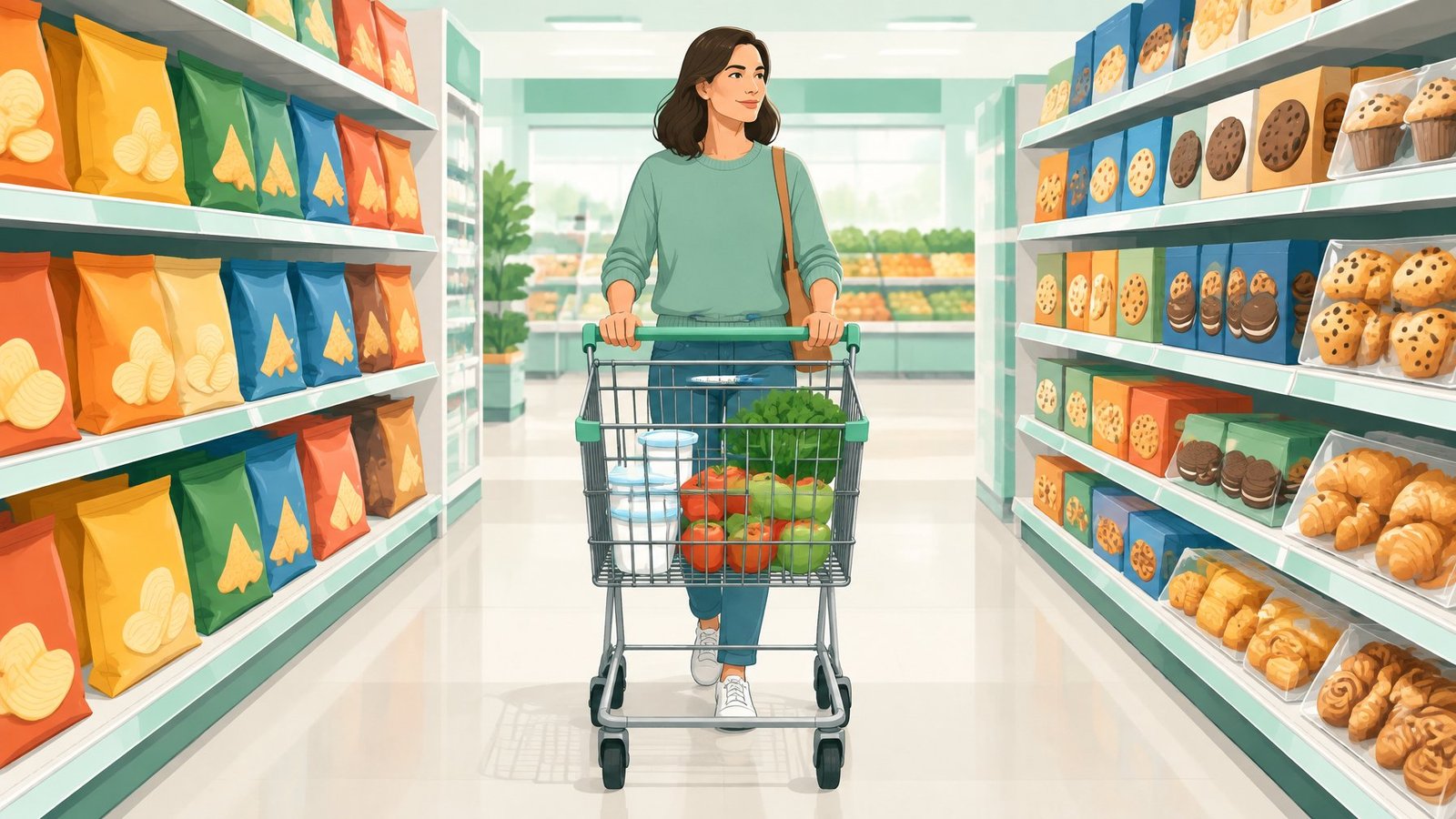
Households where someone starts taking Ozempic, Wegovy or a similar GLP-1 drug cut their grocery spending by 5.3% within six months. The biggest cuts land on chips and other savory snacks, down 10.1%, while yogurt is the category that gains most.
The study is by Sylvia Hristakeva and Jūra Liaukonytė of Cornell University’s SC Johnson College of Business and Leo Feler of the market research firm Numerator. An earlier version was posted on SSRN on December 27, 2024, and the final paper was published in the Journal of Marketing Research on December 18, 2025 (read the paper).
Receipts linked to survey answers
Numerator runs a representative panel of US households who upload their shopping receipts through an app. Starting in October 2023, it asked panelists in four quarterly survey waves whether anyone in the household used a GLP-1 drug, when they started, and why. That let the researchers line up each household’s grocery and fast-food receipts with the month someone began the medication.
In the earlier version of the study, 2,623 of 22,712 panelists, or 11.6%, had started a GLP-1 drug between January 2023 and July 2024, close to national survey estimates. Nearly half said they took it for weight loss, and these users were younger and wealthier than those taking it for diabetes, and more likely to pay out of pocket. Adopters were compared with matched non-users of similar income, household size, age and prior food spending.
Fewer chips, cookies and drive-through dinners
Grocery spending fell by 5.3% in the six months after adoption. Higher-income households cut more, by 8.2%. Most food categories declined, but the steepest drops came in calorie-dense, processed foods such as savory snacks, sweet bakery items and cookies. Only a small set of categories moved up, led by yogurt; in the earlier draft, fresh produce also rose modestly among weight-loss users.
The authors found the basket got healthier mainly by subtraction. As the earlier draft put it, shoppers improved their carts “more by cutting back on unhealthy items than by adding more healthy ones.”
Spending at fast-food chains, coffee shops and other limited-service restaurants dropped by 8.0%. The earlier draft traced those cuts mostly to breakfast and dinner hours, with higher-income households cutting breakfast and lower-income households cutting dinner.
What happens when people stop
The changes lasted through the first year of use, though they weakened after six months. Households that stopped taking the drugs drifted back toward their old grocery spending, and their baskets became slightly less healthy than before they started.
The authors caution that the study is observational. People who start these drugs may also change their diets or exercise at the same time, so the results describe how shopping changes after adoption rather than isolating the drug’s own effect. They point to randomized trials, in which drug and placebo groups got the same lifestyle advice, as evidence that appetite suppression does much of the work.
For food companies, the numbers are concrete. With grocery margins thin, an 8.2% spending cut among wealthier households is a large bite, and snack makers are first in line.
Study Details:
- Title: The No-Hunger Games: How GLP-1 Medication Adoption Is Changing Consumer Food Demand
- Authors: Sylvia Hristakeva, Jūra Liaukonytė, Leo Feler
- Journal: Journal of Marketing Research
- Publication Date: December 18, 2025
- DOI: 10.1177/00222437251412834