
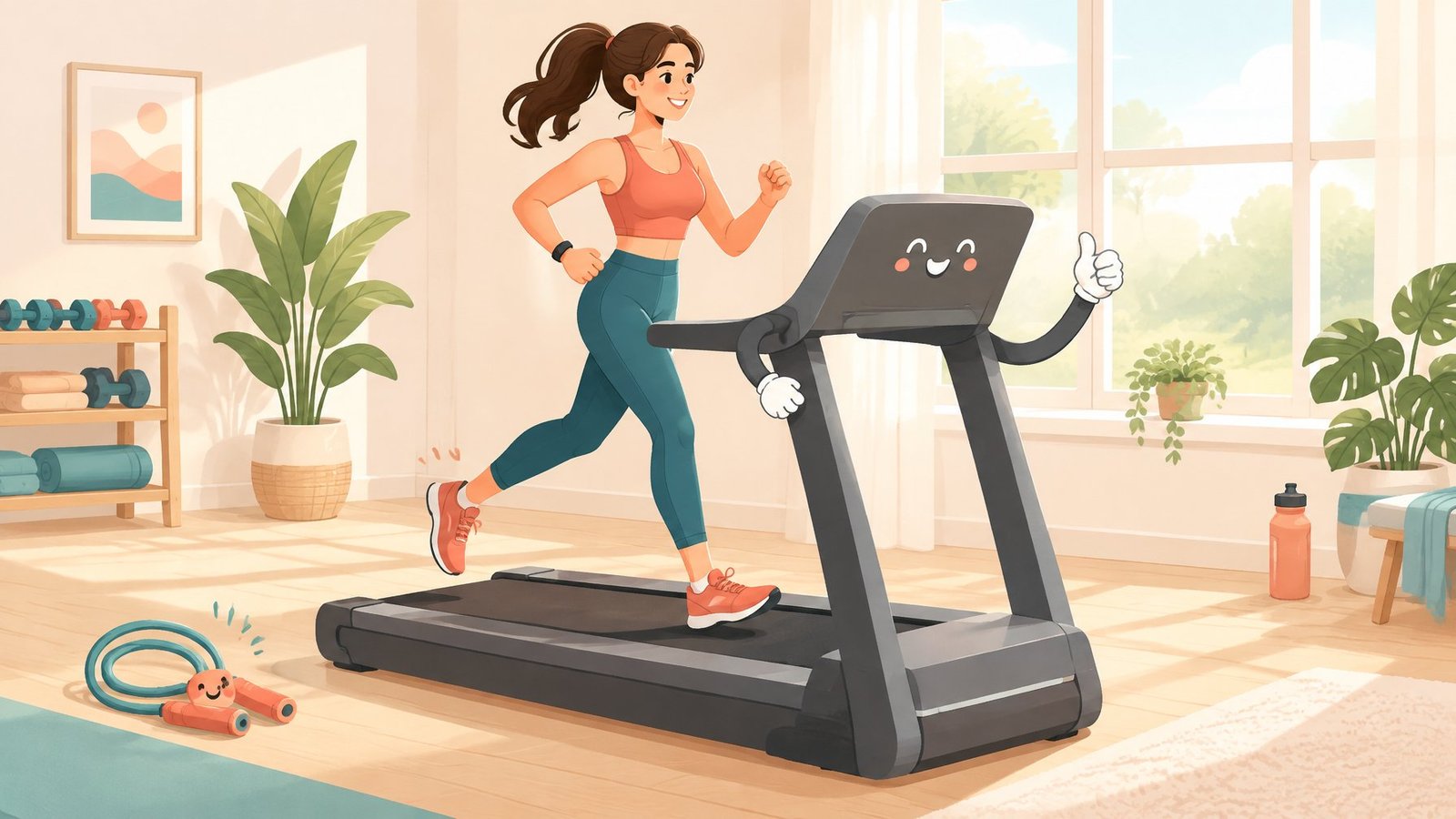
Give a treadmill a personality and people run harder on it. Across eight studies, consumers were more motivated to pursue fitness and study goals when the tools they used were presented as human-like, because those tools felt like company.
The research is by Lili Wang of Zhejiang University and Maferima Touré-Tillery of Northwestern University. It was published online on March 26, 2025 in the Journal of Marketing.
A companion that makes effort feel lighter
In the first two studies, participants worked out harder when using an anthropomorphized treadmill and an anthropomorphized jump rope than when using ordinary versions of the same equipment.
A third study traced the reason. The human-like tools created a greater sense of companionship, which in turn strengthened two beliefs: that the activity would be enjoyable, and that the goal was attainable.
When the effect fades
The boost shrank when a real human companion was present, when the tool was already seen as inherently fun, and when people already had high confidence in their own abilities. Each of those conditions supplies what the friendly tool would otherwise provide.
Role mattered too. When the tool was cast as a supervisor rather than a partner, the motivational effect disappeared entirely.
A final study showed that the effect carries into choices, shaping which tool people subsequently picked for pursuing their goal.
For makers of fitness equipment and study apps, the lesson is specific: a human touch helps, but only if the product acts like a teammate, not a boss.
Study Details:
- Title: Cardio with Mr. Treadmill: How Anthropomorphizing the Means of Goal Pursuit Increases Motivation
- Authors: Lili Wang, Maferima Touré-Tillery
- Journal: Journal of Marketing
- Publication Date: March 26, 2025
- DOI: 10.1177/00222429241303387