
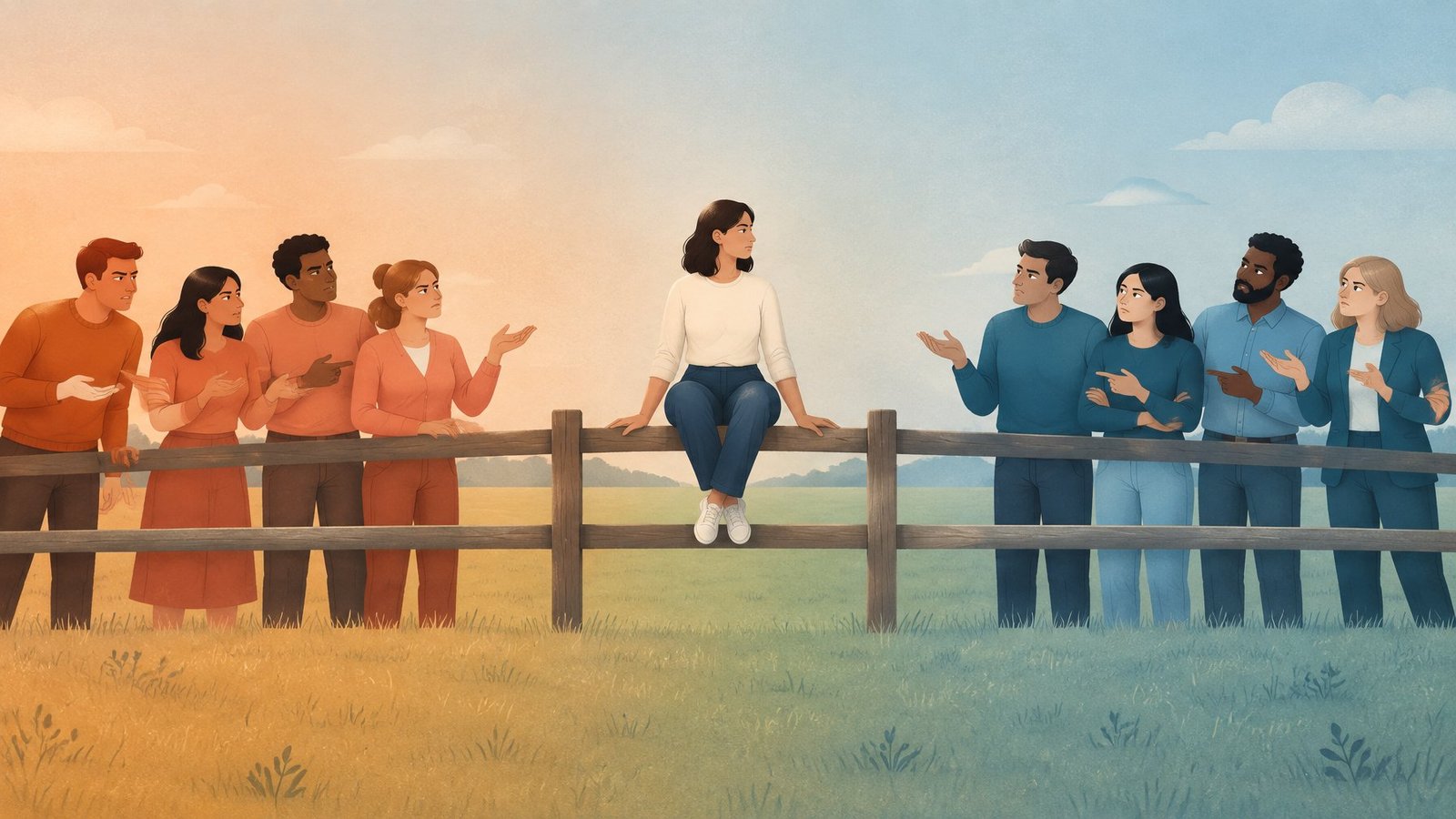
Saying “I have no position” on a divisive issue rarely buys the goodwill people hope for. Observers judge neutral people about as harshly, in moral terms, as people who openly oppose them.
That is the finding of 11 studies by Rachel L. Ruttan, Gabrielle S. Adams and Katherine A. DeCelles, published in the November 2025 issue of the Journal of Experimental Psychology: General.
A common tactic that backfires
Disagreeing with someone on a contentious sociopolitical issue often invites criticism and conflict, so many people try to avoid it by declaring themselves neutral. The researchers found that people do this commonly on controversial issues.
But across their studies, all with North American samples, observers were skeptical of other people’s neutrality. They rated neutral others as similarly moral to those who explicitly took the opposing side.
Different stories for self and other
The gap comes down to how people explain neutrality. When people are neutral themselves, they attribute it to favourable reasons such as genuine indecision.
When they watch someone else stay neutral, they are more likely to suspect apathy or strategic behavior. This actor-observer asymmetry means the same stance looks principled from the inside and evasive from the outside.
The authors conclude that while neutrality is an often-invoked strategy for managing impressions, it is unlikely to work. Someone who sits out a heated debate to keep the peace may be seen as no better than an opponent.
Study Details:
- Title: Indifferent or impartial? Actor-observer asymmetries in expressing and evaluating sociopolitical neutrality
- Authors: Rachel L. Ruttan, Gabrielle S. Adams, Katherine A. DeCelles
- Journal: Journal of Experimental Psychology: General
- Publication Date: November 2025
- DOI: 10.1037/xge0001835