Saturn in Night Sky: How to Spot the Ringed Planet
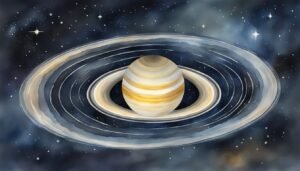
Saturn, identified by its steady, yellowish glow, is best viewed during opposition, aided by telescopes to see its rings.

Space exploration, studies of celestial bodies, and theories related to the universe and its phenomena.
Saturn, identified by its steady, yellowish glow, is best viewed during opposition, aided by telescopes to see its rings.
Albert Einstein was born on March 14, 1879, in the small city of Ulm, in the Kingdom of Wurttemberg, where he exhibited curiosity sparking his future scientific achievements.
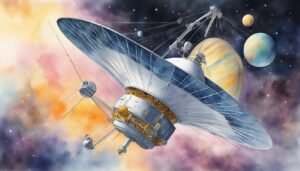
Launched in 1977, Voyager 1 explores outer space, reaching interstellar space in 2012, still transmitting data via NASA's DSN.

Vacuum decay bridges the often-intangible concepts of quantum field theory with the tangible stability of the universe.

TL;DR: Mercury has no moons.
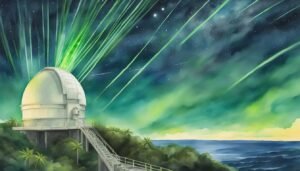
Hawaii effectively uses green laser technology for environmental monitoring, light detection and ranging (LIDAR), astrophysical research, and satellite tracking.

The James Webb Space Telescope (JWST) represents a groundbreaking advancement in space exploration, astrophysics, and our understanding of the universe.
Intense pressures and temperatures on Uranus and Neptune lead to the formation of diamonds in their atmospheres, resulting in a whimsical phenomenon known as diamond rain.
The Sun will explode in about 5 billion years, transforming into a red giant before shedding its outer layers and becoming a white dwarf.
This article explores the cosmos, detailing its history, key components, influential figures, and the impact of current research and technology.