
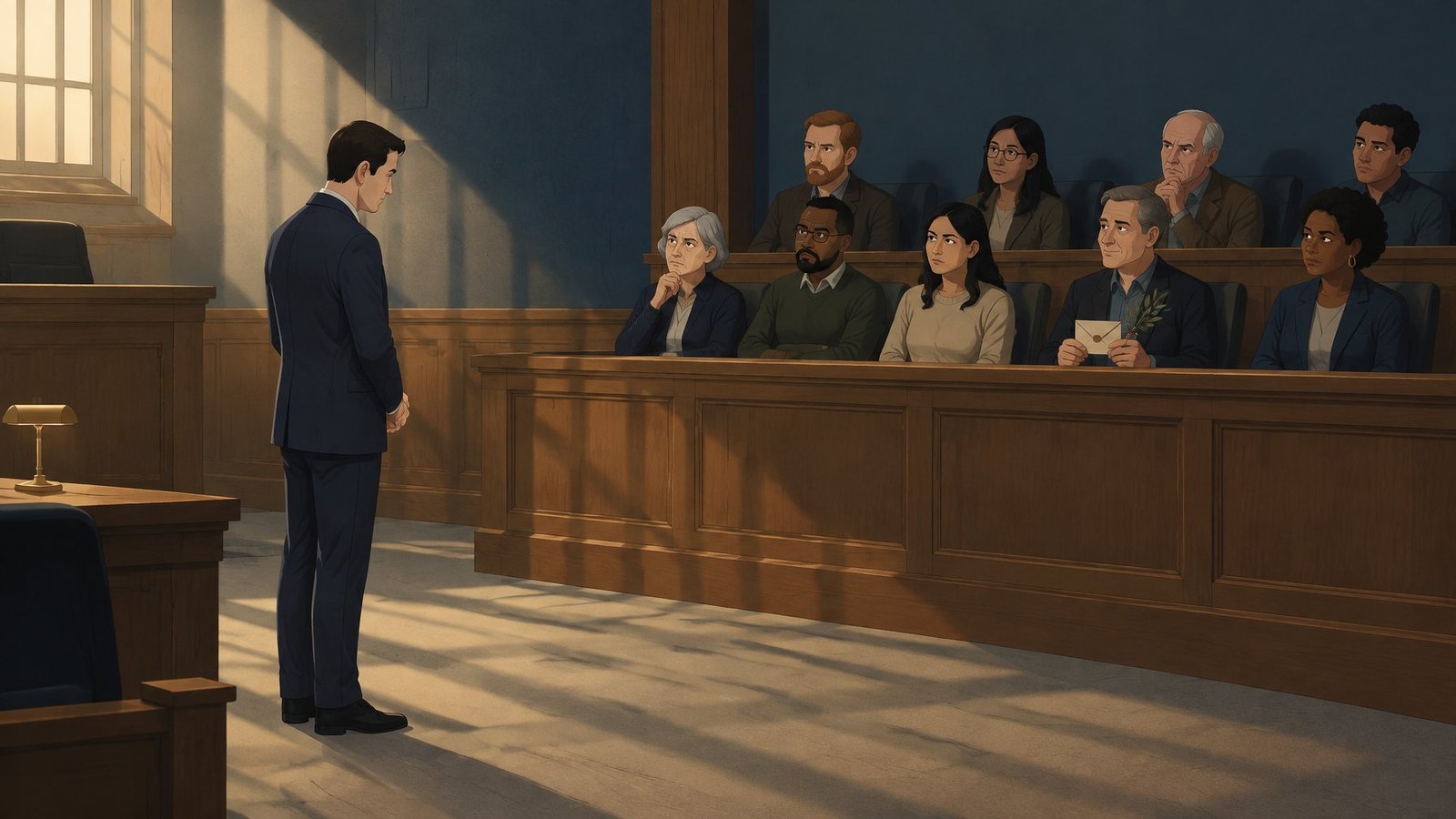
Being cleared of a crime you did not commit does not wipe the slate clean in the eyes of a jury. In mock trials, people were more likely to convict a defendant who had previously been exonerated than an otherwise identical defendant with no prior convictions.
The study, “Wrongful conviction disadvantages exonerees in subsequent criminal trials”, is by Rose Elizabeth Eerdmans and Laura Smalarz. It was published online on October 27, 2025 in Psychology, Public Policy, and Law.
A second injustice
More than 3,500 people have been exonerated in the United States, according to the National Registry of Exonerations figures the authors cite. Many are later convicted of another offence after release, a pattern earlier research has documented. The authors asked whether the original wrongful conviction itself biases how exonerees are judged the next time they come under suspicion.
In Experiment 1, 120 laypeople acted as mock jurors in a criminal trial. The defendant was described as having no prior convictions, as an exoneree or as a parolee.
The parolee was convicted most often. But the exoneree was also more likely to be convicted than the defendant with a clean record, and this bias held across a range of individual-difference measures.
What reduced the bias
Experiment 2, with 378 mock jurors, looked at why the bias arises and tested a policy fix: telling jurors that the exoneree had received compensation and an apology.
With compensation and an apology on record, jurors were less likely to show bias against the exoneree. That change went along with fewer negative judgments about the exoneree’s character and a stronger sense that the person had suffered an injustice.
The authors argue that compensating exonerees and issuing official apologies is a promising way to stop a wrongful conviction from compounding into a second one.
Study Details:
- Title: Wrongful conviction disadvantages exonerees in subsequent criminal trials
- Authors: Rose Elizabeth Eerdmans, Laura Smalarz
- Journal: Psychology, Public Policy, and Law
- Publication Date: October 27, 2025
- DOI: 10.1037/law0000474