
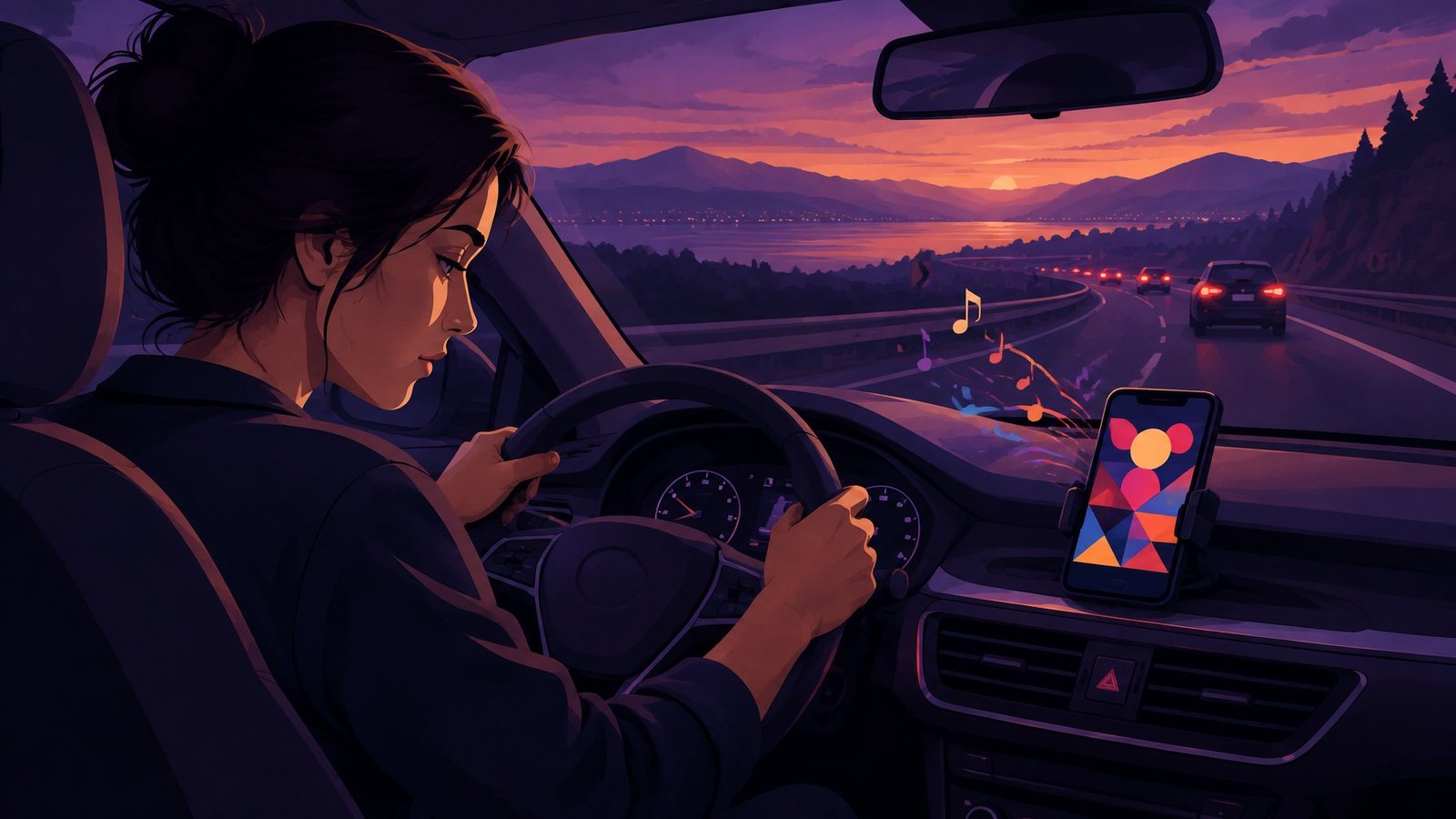
When a blockbuster album drops, more Americans die on the road. On the release days of the 10 most streamed albums from 2017 to 2022, music streaming jumped 43% and US traffic fatalities rose 15.1% compared with the surrounding days.
The study comes from Vishal R. Patel, Christopher M. Worsham, Michael Liu and Anupam B. Jena of Harvard Medical School’s Department of Health Care Policy, with affiliations at Brigham and Women’s Hospital, Massachusetts General Hospital and the National Bureau of Economic Research. It first circulated as NBER Working Paper No. 34866 in February 2026 and was published in JAMA Network Open on August 17, 2026.
Using album releases as a natural experiment
Researchers cannot ethically distract drivers on purpose, and people who use phones while driving differ from those who do not. So the team looked for days when phone use surges for reasons unrelated to road risk. Big album releases fit: they are timed to maximize attention, not to coincide with dangerous driving conditions.
Using Spotify’s daily charts, the authors picked the 10 albums with the most first-day streams between 2017 and 2022. Taylor Swift’s Midnights topped the list, followed by Drake’s Certified Lover Boy and Bad Bunny’s Un Verano Sin Ti.
They then compared deaths on each release day with the 10 days before and after, using the Fatality Analysis Reporting System, the federal registry of fatal US crashes. The window includes the same weekday a week earlier and later, and the models adjusted for holidays, day of week, week of year and calendar year. That matters because most of these albums came out on Fridays.
About 18 extra deaths per release day
Streaming of the top 200 songs averaged 123.3 million on release days against 86.1 million on surrounding days. The adjusted number of traffic deaths was 139.1 on release days versus 120.9 on other days, an increase of 18.2 deaths. Across the 10 albums, that adds up to roughly 182 deaths attributable to the release days.
The rise was larger among younger drivers and men. Drivers under 40 saw 7.8 additional deaths on release days, against 4.1 among those 65 and older, and male drivers saw 13.5 extra deaths against 4.4 for women.
The excess was also concentrated in crashes with a single occupant, a sober driver and clear weather, and in cars with a smartphone infotainment platform. The authors say these subgroup patterns suggest the extra deaths may come from driver distraction caused by smartphone use.
What the study cannot show
The authors list their limits. The design assumes nothing else about release days raises crash risk, and some residual confounding is possible, although checks against the same weekday in adjacent weeks and the same date in other years found no sign of weekday or holiday effects.
Spotify is only one service, so the estimates capture the effect of album releases across all platforms and formats. The data cannot directly confirm that drivers were using phones, and they cover only fatal crashes, not nonfatal ones.
The authors suggest that phone and car makers, software developers and policymakers may need to do more about streaming media behind the wheel.
Study Details:
- Title: Smartphones, Online Music Streaming, and Traffic Fatalities
- Authors: Vishal R. Patel, Christopher M. Worsham, Michael Liu, Anupam B. Jena
- Journal: JAMA Network Open (earlier circulated as NBER Working Paper No. 34866)
- Publication Date: August 17, 2026
- DOI: 10.1001/jamanetworkopen.2026.29282