
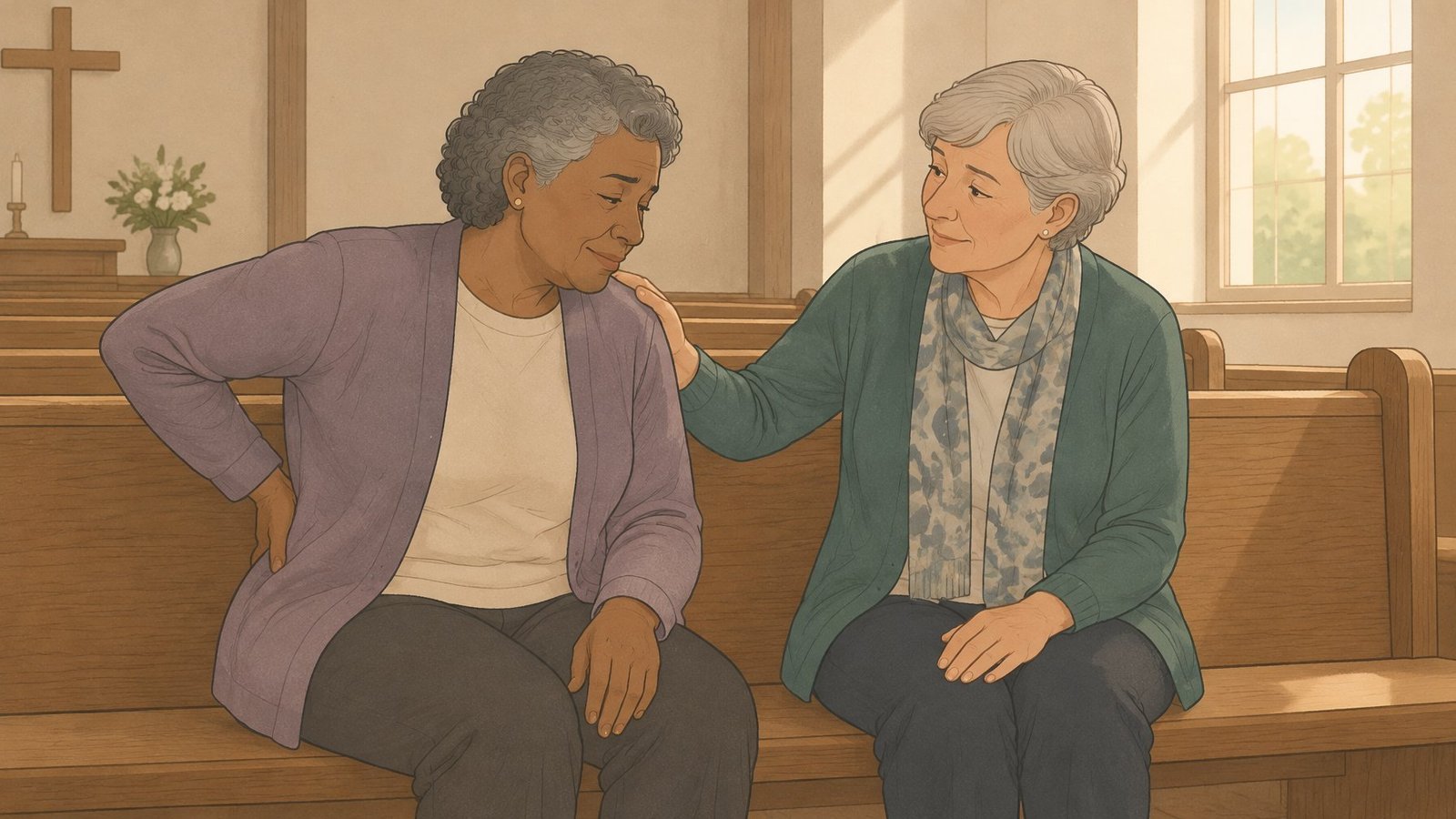
Support from a religious community and turning to faith in hard times appear to ease the toll of chronic pain most for people with the least education. In a national sample of American adults living with chronic pain, these religious resources narrowed the large gap in how much pain disrupted daily life between the least and most educated.
The study, titled “Easing the Burden? Religiosity and Educational Inequality in Pain Interference,” was written by Laura Upenieks and Markus H. Schafer of Baylor University. It was published online in the Journal for the Scientific Study of Religion on August 20, 2026.
Two competing ideas
Chronic pain affects more American adults than heart disease, cancer and diabetes combined, and it is strongly patterned by education. People without a high school diploma report the most pain, and college graduates the least.
The authors tested two opposing predictions about religion’s role. The deprivation compensation hypothesis holds that people with fewer secular resources lean on religion more and gain more from it, which would shrink the education gap. The enhanced resources hypothesis holds the opposite: that highly educated people are better at weaving religious teachings into their wider coping skills, which would widen the gap.
How the study worked
The researchers used the third wave of the Midlife in the United States (MIDUS) study, collected in 2013 and 2014. They focused on 1,009 respondents who reported chronic pain.
Participants rated how much pain had interfered with their daily activities, mood, social life, sleep and enjoyment of life over the past week, on a scale from 0 to 10. The team also measured religious identity, the importance of religion, service attendance, religious coping such as praying or seeking God’s guidance, and the support people felt they could get from their congregation.
Three tiers of pain
Education sorted people into three groups. Those without a high school diploma had the highest pain interference, averaging about 4.9. People with a high school diploma, some college or vocational training scored around 3.6. Those with a bachelor’s or graduate degree scored lowest, at about 2.5 and 2.3.
Being religious, rating religion as important or attending services had no direct link to pain interference. Only support from a congregation was tied to lower interference overall.
Where religion made a difference
The picture changed when the researchers looked at education and religion together. Among people without a high school diploma, those with little congregational support averaged a pain interference score of about 5.1, while those with strong support averaged about 3.5. A similar pattern appeared for religious coping, from about 5.3 to 4.4.
At high levels of support, the average gap between neighboring education groups shrank by 36%. At high levels of religious coping it shrank by 49%. Both results favor the deprivation compensation hypothesis.
The authors note that religion did not erase the education gap, which remained substantial. Among the most educated, a lot of religious coping was sometimes linked with slightly higher pain.
Limits of the findings
The data come from a single point in time, so the study cannot show that religion reduces pain interference. People in pain might also turn to faith and their congregations because of it.
The sample was older, mostly white and fairly religious, and only about 7% had not finished high school. A check in a newer MIDUS sample from 2022 to 2024 largely repeated the pattern, though the religious coping result fell just short of statistical significance there.
The authors suggest religious support could be worth exploring as a non-drug complement in pain care, given the toll of the opioid crisis.
Study Details:
- Title: Easing the Burden? Religiosity and Educational Inequality in Pain Interference
- Authors: Laura Upenieks, Markus H. Schafer
- Journal: Journal for the Scientific Study of Religion
- Publication Date: August 20, 2026 (online)
- DOI: 10.1111/jssr.70095