
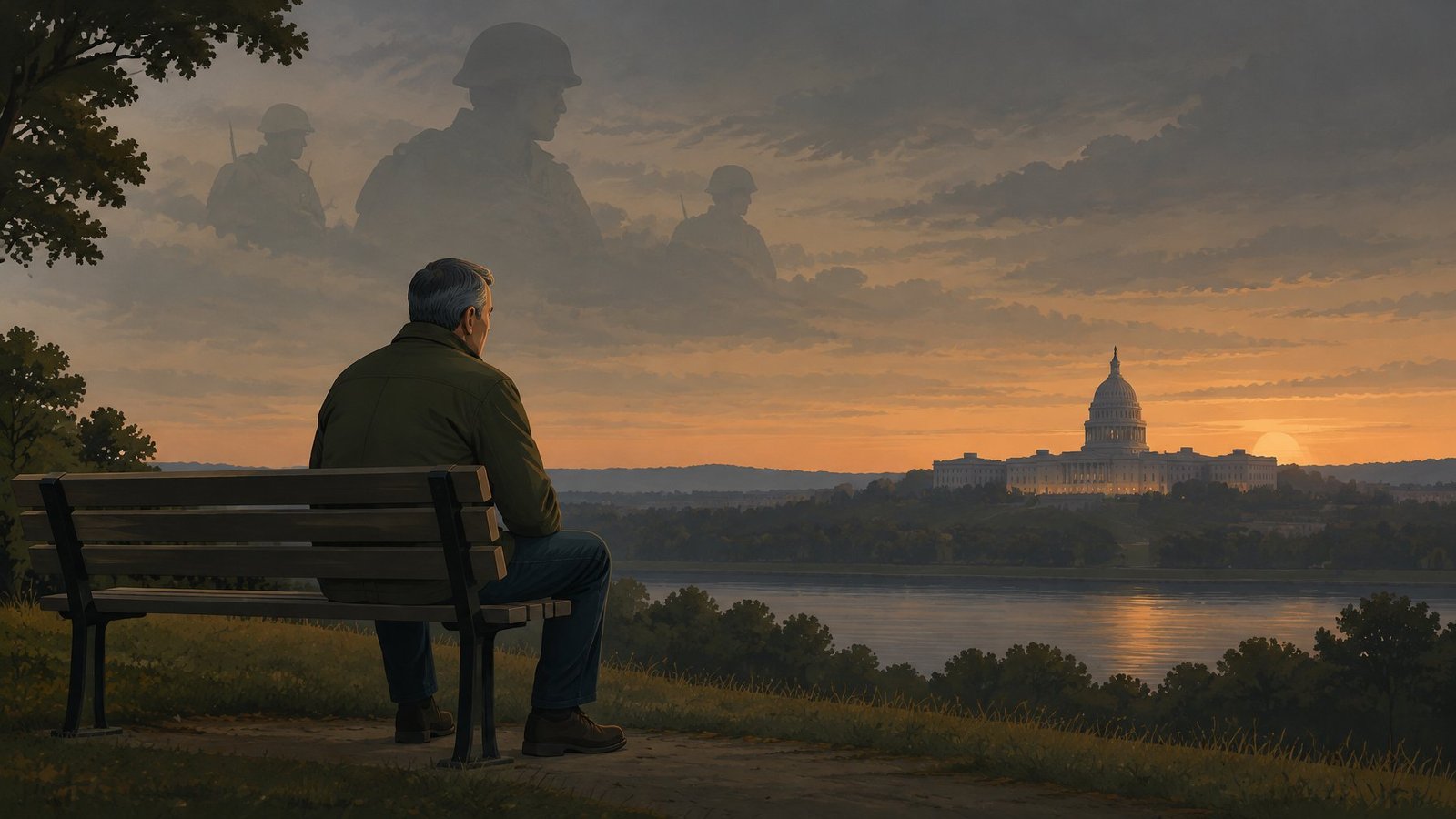
American military veterans were almost twice as likely as comparable civilians to strongly support using force to put Donald Trump back in the White House, a national survey finds. The extra support was concentrated among veterans with combat trauma, service-related PTSD or disillusionment with the military, while other veterans looked much like everyone else.
The study was led by Robert A. Pape of the University of Chicago, with Keven G. Ruby and Kyle D. Larson of the university’s Chicago Project on Security and Threats and Kentaro Nakamura of Harvard’s Kennedy School. It was published online in the Journal of Conflict Resolution on August 1, 2024 (read the paper).
The question matters because, as the authors note, about 15% of those prosecuted for storming the US Capitol on January 6, 2021, were military veterans.
A matched national survey
The survey was fielded by NORC at the University of Chicago between December 2021 and January 2022. It reached a nationally representative sample of 843 veterans and 820 demographically matched people who had never served, all under 65.
The authors measured “insurrectionist sentiments” with two statements: that force is justified to restore Trump to the presidency, and that the respondent would personally use force to do so. Answers were combined into a 1 to 5 index.
The size of the gap
Thirteen percent of veterans scored 4 or 5 on the index, meaning high support, compared with 7% of non-veterans. In regression models controlling for partisanship, religion and religiosity, age, gender and race, insurrectionist sentiments were 15% higher among veterans on average.
Because no one is randomly assigned to military service, the authors ran a sensitivity analysis. An unmeasured factor would need to be more than four times as powerful as the strongest measured one, being a Republican, to erase the veteran effect.
Partisanship alone does not explain it. The veterans in the sample were more Republican than the matched civilians (49% versus 38%), but support for Trump and belief in far-right conspiracy theories, separately or together, did not fully account for the gap.
Trauma and disillusionment
The clearest pattern came from veterans’ own experiences. Those who reported combat trauma, service-related PTSD or disillusionment with their service were more likely to hold insurrectionist sentiments. Veterans without those experiences were statistically indistinguishable from non-veterans. Veterans with high scores also tended to be younger: 20% of them were under 30, against 5% of other veterans.
The authors stress that this part of the analysis is associational. It is preliminary evidence that negative service experiences are linked to higher risk, not proof that they cause it. They also note that reducing conspiracy theories, while useful, would not address the service-related issues they found.
They recommend further research on whether the pattern extends to political violence beyond the case of Trump. With about 10 million veterans aged 18 to 64 in the United States, they write, the added risk linked to military service warrants attention.
Study Details:
- Title: Understanding the Impact of Military Service on Support for Insurrection in the United States
- Authors: Robert A. Pape, Keven G. Ruby, Kyle D. Larson, Kentaro Nakamura
- Journal: Journal of Conflict Resolution
- Publication Date: August 1, 2024
- DOI: 10.1177/00220027241267216